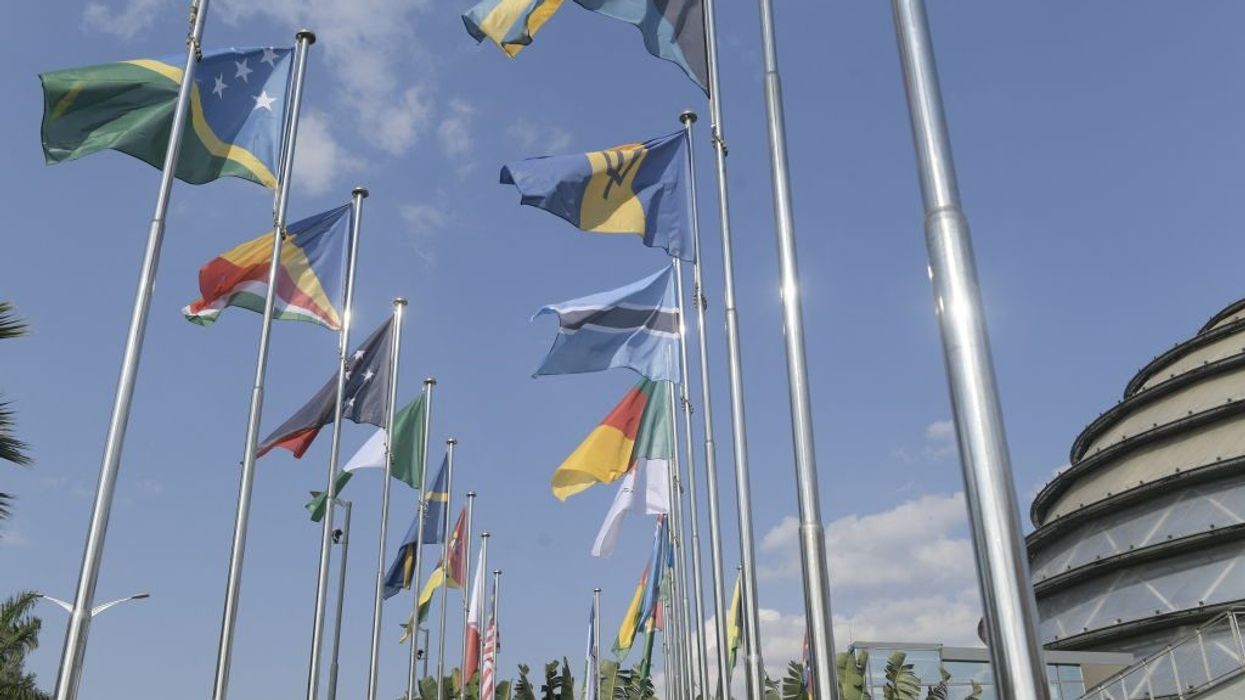

ESTABLISHED more than 70 years ago, it has the stated aim of upholding democracy, rule of law and good governance around the world. Here are a few key things to know about it:
Key facts
Full name: Commonwealth of Nations
Member states: 54
Head of the Commonwealth: Queen Elizabeth II (since 1952)
Secretary-General: Patricia Scotland (since 2016)
Population: 2.5 billion
Area: 30 million square kilometres
Foundation of modern Commonwealth: 1949
Headquarters: Marlborough House, London
Focus: Development, democracy, climate change
Landmark events
1926: Balfour Declaration. Declared the UK and the dominions as equal in status as members of "the British Commonwealth of Nations".
1931: Statute of Westminster. Established legislative independence for the dominions and set the basis for the relationship between Commonwealth realms and the crown.
1949: London Declaration. Birth of the modern Commonwealth. Allowed republics as members, to allow independent India's continued membership. "British" dropped from title.
1971: First Commonwealth Heads of Government Meeting in Singapore.
1991: Harare Declaration. Sets out Commonwealth's core values.
2020: The Maldives becomes the Commonwealth's 54th member after application for re-admission approved.
Population, area, GDP
Countries drawn from: Africa (19), Caribbean and Americas (13), Pacific (11), Asia (8), Europe (3).
Biggest country by population: India (1.4 billion).
Smallest country by population: Tuvalu (11,000).
Biggest country by area: Canada (9,984,670 square kilometres).
Smallest country by area: Nauru (21 square kilometres).
Biggest GDP: UK, India, Canada, Australia, Nigeria.
Smallest GDP: Tuvalu, Kiribati, Tonga, Dominica, St Vincent and the Grenadines.
Membership
Criteria: Historic association with existing member; compliance with Commonwealth principles; commitment to democracy, rule of law and good governance.
Members in 1949: Australia, Canada, Ceylon, India, New Zealand, Pakistan, South Africa, United Kingdom.
Latest first-time members: Rwanda (2009), Mozambique (1995) Cameroon (1995), Namibia (1990), Brunei (1984).
Countries that left and re-joined: South Africa (1961-1994), Pakistan (1972-1989), Fiji (1987-1997), The Gambia (2013-2018), The Maldives (2016-2020).
Countries that left and never returned: Ireland (1949), Zimbabwe (2003).
Main events
Summit: The Commonwealth Heads of Government Meeting, CHOGM, is held every two years. The event has not been hosted since 2018 due to the coronavirus pandemic.
Commonwealth Games: The Olympics-style multi-sport event is held every four years.
The last event was held on Australia's Gold Coast in 2018, with the next scheduled for the English city of Birmingham in 2022.
Australia tops the all-time medals table ahead of England, Canada, India and New Zealand.
(AFP)