
A British Indian playwright has joined hands with a former diplomat for a unique immersive theatrical experience, with the city of London as their stage to tell the story of the East India Company and British Empire.
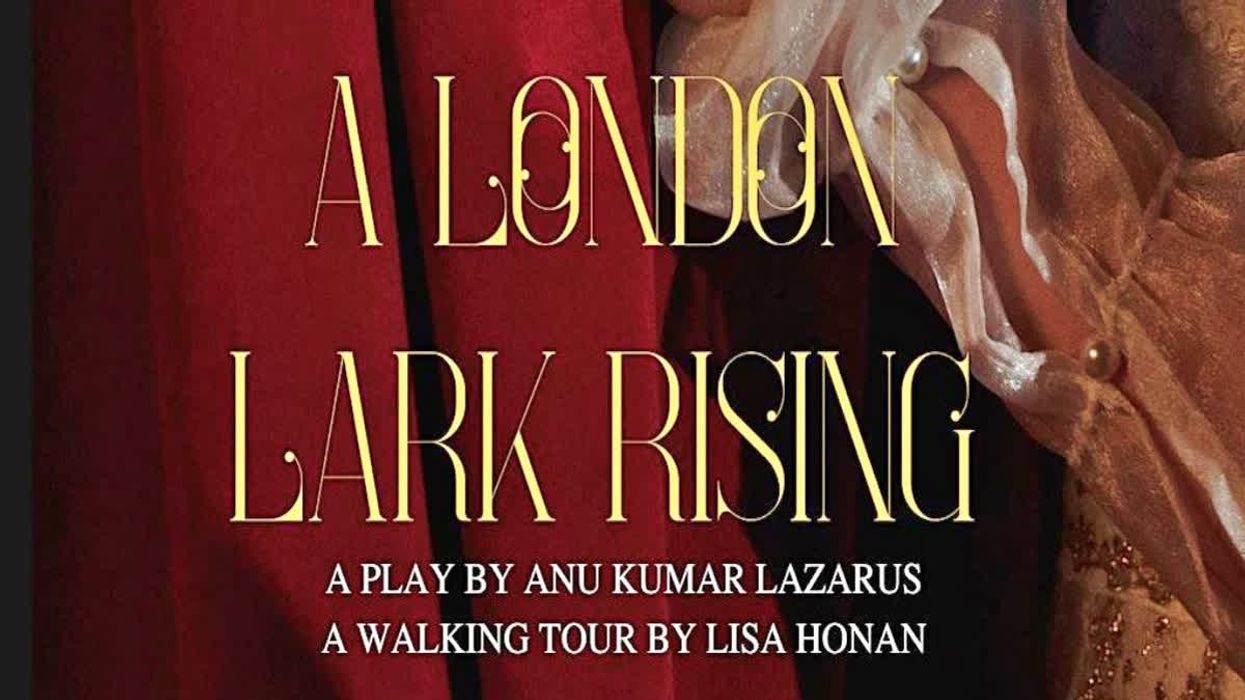
‘A London Lark Rising’ is a dramatised walking tour being brought to life by Dr Anu Kumar Lazarus and Lisa Honan, with double shows scheduled on September 7.
The so-called “walking play” spans hundreds of years of history as it takes audiences through well-known and lesser-known sites in the heart of London, showcasing several famous historic characters from both India and the UK.
“Last year, I wrote a huge play about the history of the East India Company wandering around London. When I finished, I realised it was too big for the stage and decided to put it on the streets it had been inspired by,” explains Kumar Lazarus, a UK-born doctor and playwright whose parents hail from Uttar Pradesh.
“After going on Lisa’s ‘The East India Company London Walk’, I decided that she would be a perfect partner to collaborate with. She is hugely knowledgeable as the ex-Governor of Saint Helena Island, a British Overseas Territory governed by the East India Company for 200 years. So, we set about to rework her walk and dramatise it."
The walking play, structured over 90 minutes, is designed as a promenade performance experience, recounting the history of the East India Company (EIC) in some of the places where the events actually took place. With the help of artists in period costumes, the tour is intended to transport audiences back to the facades of the 16th century to delve into how today’s London was shaped by a shared past with India.
“For me, iconic characters like William Shakespeare and Queen Elizabeth I walking in the City walls just as they should have done sends a shiver down the spine. But I think the really great thing is the Indian characters that we bring to life in the streets of London — alluding to the fact that without India, England would not look like it does today,” said Kumar Lazarus.
“I return there (UP) as often as I can. I have been performing or making theatre type work from a very young age and plan to continue working as a doctor and writing plays and novels,” added the multi-faceted professional, who is also a dancer and Yoga teacher.
‘A London Lark Rising’ has received the backing of the UK’s National Lottery Heritage Fund and Skinners Livery Company for performances to be staged during the summer period in London over the course of three years.
The allocated funding also includes Lisa Honan doing non-dramatised walks of the City of London, the financial hub of the UK capital, for schools to bring the history of the Empire to life for students.
“We walk between the sites where the East India Company (EIC) had a footprint as I tell the history of the Company, from the courtyard where it first began in the 17th century and how it changed what the world ate, drank, and wore through its trade with India, Indonesia, China and points beyond,” explains Honan, a certified City of London Guide who was awarded a CBE by Queen Elizabeth II for services to international aid.
Her interest in the East India Company dates back to her time as a diplomat, having lived in a mansion built for EIC Governors on Saint Helena Island in the 18th century.
The East India Company, founded in 1600, is seen as a precursor to the modern-day multinational corporation that was granted a royal charter to trade in the Indian Ocean region.
Its headquarters were located in what is today the City of London, from where the EIC went on to establish a trading monopoly in India and laid the foundations for centuries of British colonial rule in the subcontinent.
(PTI)