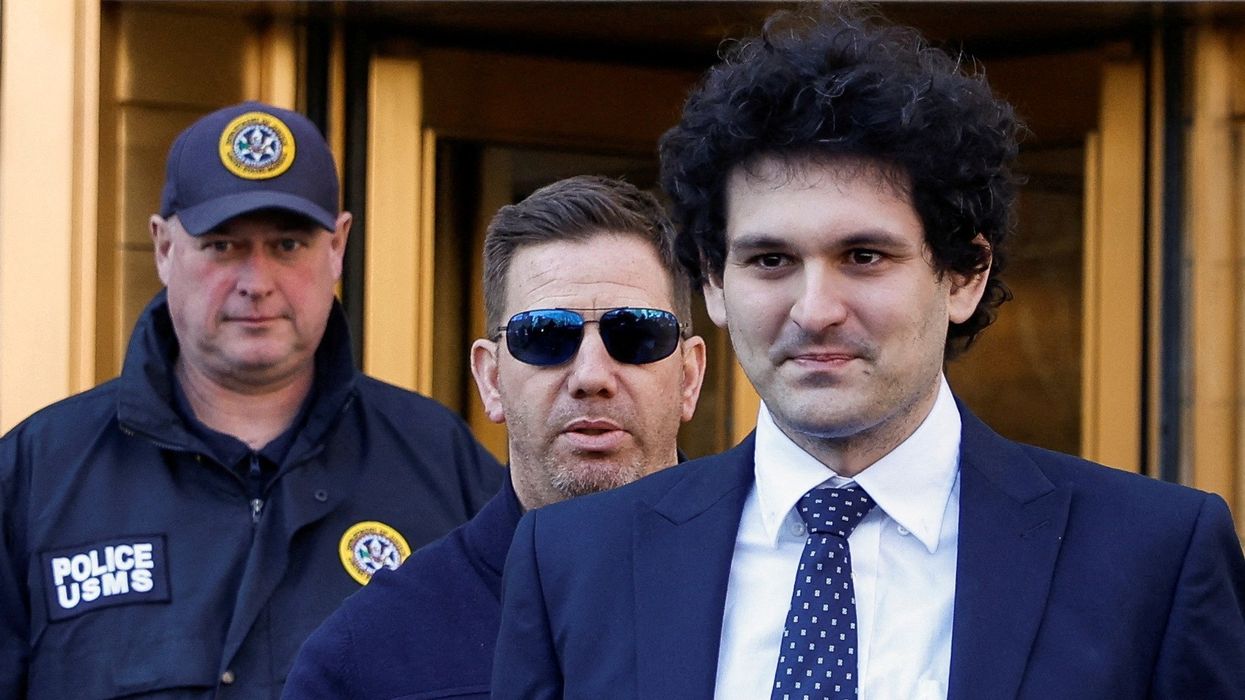

With the crypto exchange FTX's former billionaire boss Sam Bankman-Fried sentenced on March 28, the focus is now on the fate of three former members of his inner circle.
Caroline Ellison, Nishad Singh and Gary Wang admitted their roles in the fraud and provided testimony at Bankman-Fried’s trial in return for leniency.
They are due to be sentenced in the coming months and legal experts claim they are unlikely to face prison time as co-operating witnesses, The Times reports.
Judge Lewis Kaplan, who presided over Bankman-Fried’s trial, will determine their punishment.
Ellison, Singh and Wang have been barred from running public companies or working in crypto again as part of their plea deals.
They have also each reached settlements with the market regulators Securities and Exchange Commission and Commodity Futures Trading Commission.
A New York jury last year found Bankman-Fried (32) guilty of stealing from unsuspecting customers to prop up his hedge fund Alameda Research, buy luxury properties, and fund political donations.
He was last week sentenced to 25 years in prison for stealing $8 billion from customers. Judge Kaplan allowed Bankman-Fried to be incarcerated close to San Francisco Bay Area to allow his parents to visit easily.
His prison term could get shortened to nearly half if he maintains good conduct while in jail.
Bankman-Fried's lawyers said the former FTX boss had overlooked risk management but did not steal customer money. They said he would appeal against his conviction and prison sentence.
Several FTX investors expressed anger and disappointment with the sentence, considering the losses faced by thousands of people.
Ellison, who headed Alameda Research, was the first to turn on Bankman-Fried, also her ex-boyfriend.
She told the court that Bankman-Fried had instructed her to hide Alameda’s liabilities to FTX and made risky investments with customer funds.
Ellison provided the prosecutors with crucial evidence that nailed the former FTX chief.
She pleaded guilty to two charges of wire fraud, two of conspiracy to commit wire fraud, conspiracy to commit commodities fraud, conspiracy to commit securities fraud, and conspiracy to commit money laundering.
Ellison met Bankman-Fried while working at Jane Street Capital.
Alameda was initially located in the Bay Area, and then moved to Hong Kong and Bahamas.
Wang was the FTX exchange’s chief technology officer and its co-founder. He got in touch with Bankman-Fried while studying at the Massachusetts Institute of Technology.
He testified that he had tweaked FTX’s code in July 2019 at Bankman-Fried’s behest, which provided Alameda special privileges.
This enabled Bankman-Fried to withdraw billions of dollars to make risky trades with FTX customers’ deposits.
He had a 16 per cent stake in FTX and was once a crypto billionaire. He lost everything once the FTX scandal broke out.
Singh was FTX’s head of engineering and handled Bankman-Fried's donations to politicians. He testified that Bankman-Fried spent $1.13 billion on celebrity endorsements and sponsorship deals.
He pleaded guilty to wire fraud, commodities fraud, and securities fraud but claimed he found about FTX’s dubious activities in the late stages.