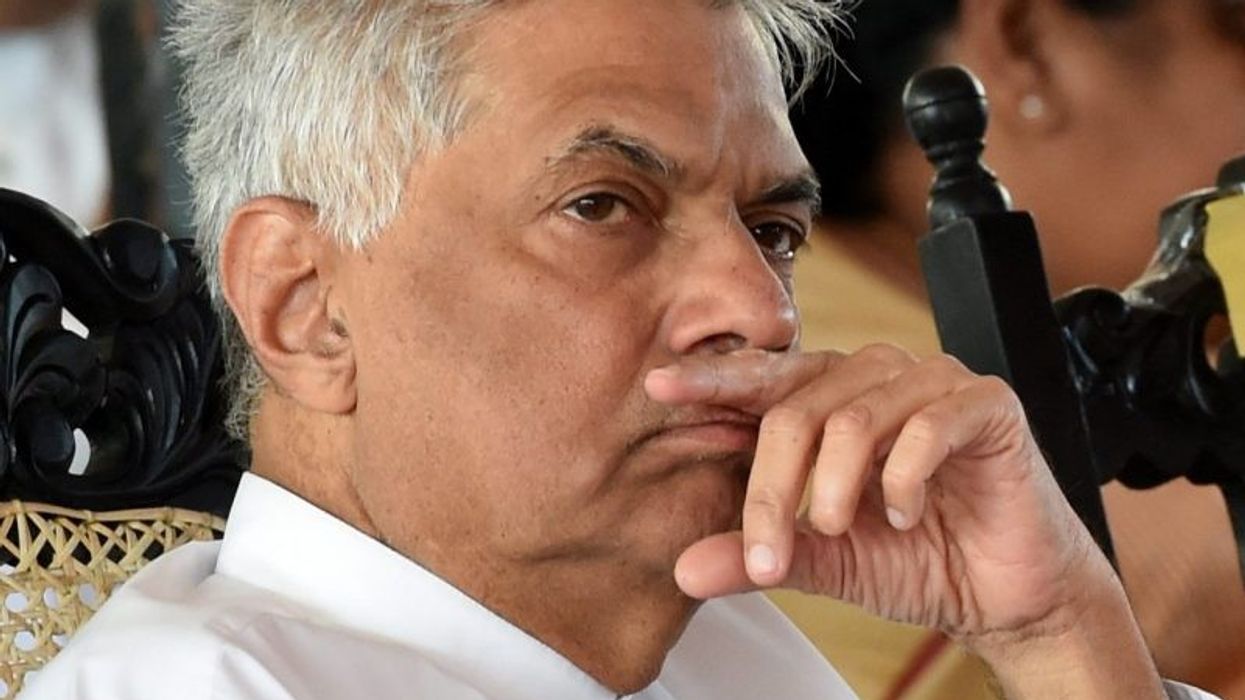
Ranjit Singh Boparan, dubbed the "chicken-king", has seen his food company in the UK suspend poultry processing operations at a plant accused of serious safety breaches.
The 2 Sisters Food Group, one of the largest suppliers of chicken to supermarkets across the UK, said the action had been taken as a temporary measure at its West Bromwich factory in the West Midlands to retrain staff on hygiene standards.
The company said in a statement today that it was "shocked and distressed" by the allegations and the footage which emerged last week as part of a joint investigation by the Guardian newspaper and ITV and have been "working around the clock" to get to the truth of the matter.
"Our internal investigation has shown some isolated instances of non-compliance with our own quality management systems. We have therefore decided to temporarily suspend operations at the site to allow us the time to retrain all colleagues including management in all food safety and quality management systems," the statement said.
The company added that the UK's Food Standards Agency (FSA) has been in daily attendance since the allegations were raised and confirmed that it has "not identified any breaches".
The move came after undercover footage showed an instance of 2 Sisters workers at the plant altering the source and slaughter date of poultry being processed in the firm's Site D plant.
Experts said altering "kill dates" could artificially stretch the commercial life of the meat and dupe consumers into buying chicken past its use-by date. It is illegal to place incorrect use-by dates on food, which are set for safety reasons and differ from "best before" dates.
Other sections of the footage, which was filmed in August, showed chicken being picked off the floor and thrown back on to the production line, and older poultry being mixed with fresher birds.
All major supermarket supplied chicken from the plant quickly announced a boycott of the supplier until their own investigations were complete, as did the FSA.
The chairman of the House of Commons environment, food and rural affairs committee, Neil Parish, said he was preparing to call Singh before the committee to answer questions about the allegations.
"It would be good if we could have a short, sharp inquiry. We need to restore both food safety, animal welfare and consumer confidence to these massive chicken plants run by 2 Sisters," Parish said.
The 2 Sisters group was founded in 1993 by Ranjit Singh Boparan and now employs 23,000 staff. Although it has diversified, the bulk of the groups income still comes from processing poultry.
The company, the UK's second-largest food company which claims to process around 6 million chicken every week, has said its staff's pay will not be affected during the suspension of operations.
"We continue to work closely with the FSA and our customers throughout this period. We remain committed to ensuring that we operate to the highest standards of hygiene and food safety, and we act with honesty and integrity at all times," a 2 Sisters spokesperson said.