External affairs minister S Jaishankar said on Friday that there was a significant increase in the budget for infrastructure along the India-China border after Narendra Modi took office as prime minister in 2014.
He pointed out that prior efforts to improve border infrastructure had been stagnant since the 1962 war. "From Rs 3,500 crore (£335.96 million) , the budget has been raised to Rs 14,500 crore (£1.392 billion)," Jaishankar said during an interaction with youth at an event titled Why Bharat Matters: Opportunity for youth and participation in global scenario.'
Jaishankar emphasised the importance of adopting a "realistic, grounded and practical policy" with China. "China is our neighbor, and be it China or any other neighbour, the border settlement is one kind of challenge," he said. He stressed the significance of historical lessons, noting, "if we do not learn lessons from history, we will continue to make mistakes again and again."
Reflecting on the past, Jaishankar said the 1950 occupation of Tibet by China, which greatly disturbed then Home Minister Sardar Vallabhbhai Patel. Patel had written to prime minister Jawaharlal Nehru expressing his concerns. "He was very disturbed with India's policy towards China," Jaishankar said. Patel had warned Nehru not to take Chinese assurances at face value, but Nehru believed that the Chinese desired friendship and dismissed Patel’s concerns.
Jaishankar criticised the historical approach to handling the border with China, pointing out the failure to notice Chinese infrastructural developments such as the road through Aksai Chin until it was too late.
"From 1957 to 1962, when Chinese were building a road, preparing for war, the Indian government was busy thinking that India is non-aligned and China is non-western, and both countries have ideological relations," he said.
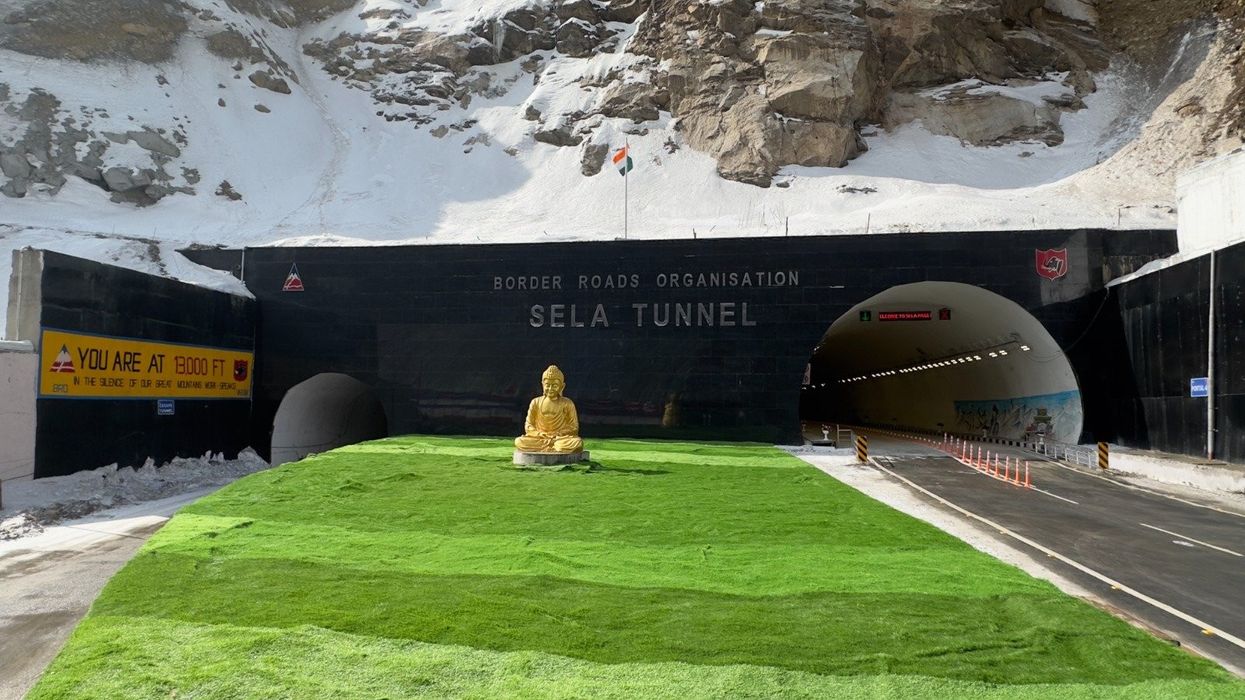
"Just recall that in the last few years, new tunnels, roads, bridges along the China border are made. Sela tunnel was made where the Chinese had reached in 1962. Till the time, we do not make any headways into the border infrastructure, how can we make the border pose a challenge," he said.
Earlier this week, in an interview to Newsweek, prime minister Modi had said that for India, the relationship with China is important and significant, and "we need to urgently address the prolonged situation on our borders so that the abnormality in our bilateral interactions can be put behind us."
(PTI)