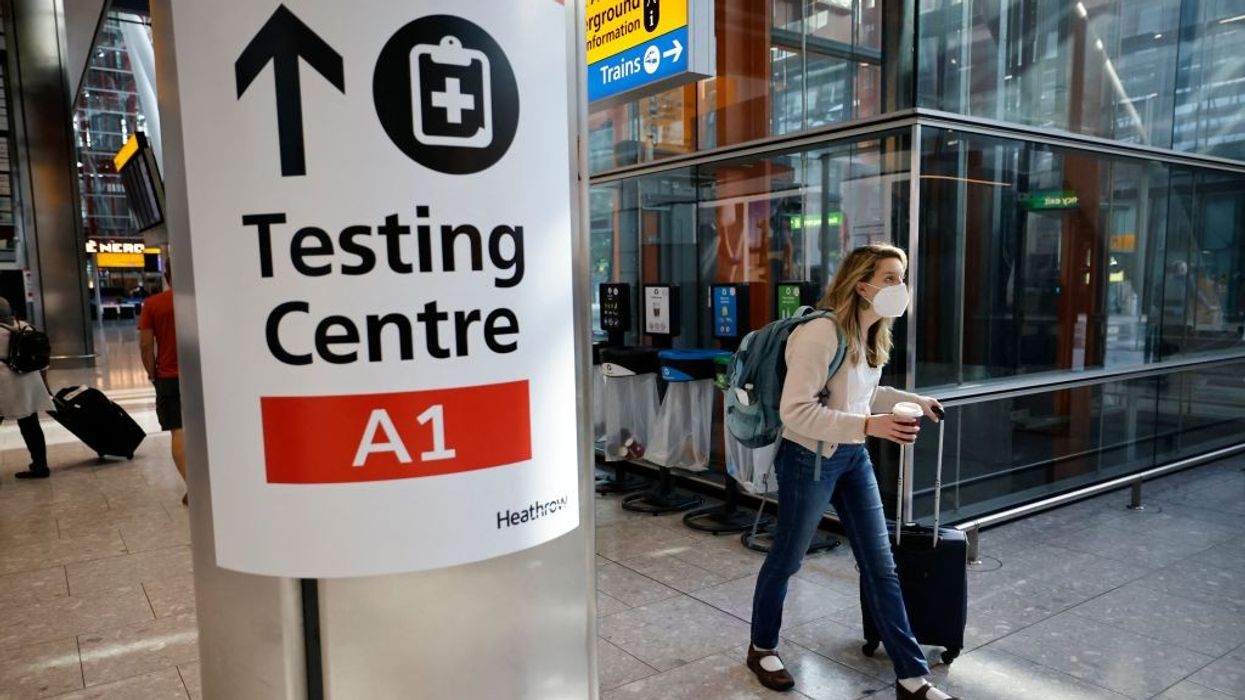

PEOPLE who are fully jabbed and identified as a contact of someone with Covid-19, whether Omicron or not, will have to take an NHS rapid lateral flow test for the next seven days from Tuesday (14).
The move comes in order to slow the spread of the Omicron variant in the UK as it is expected to become the most dominant strain in the country by mid-December.
It aims to reduce pressure on people’s every day lives by replacing the requirement for Omicron contacts to isolate for 10 days, while protecting the public by identifying asymptomatic cases and stopping the chain of transmission. Moreover, daily testing will also help understand how and where the virus is spreading.
As of now, anyone whose rapid test comes back positive or who develops Covid-19 symptoms should self-isolate and take a confirmatory PCR test to verify the result. If the PCR result comes back positive, contacts must self-isolate for 10 days from the day they took the positive rapid test or developed symptoms. They do not need to continue taking rapid tests during that 10-day isolation period. If the PCR result comes back negative, contacts can leave self-isolation but should continue to take rapid tests for the remainder of the seven days.
Health secretary Sajid Javid said: “The Omicron variant is quickly gaining ground in the UK and is expected to become the dominant strain by mid-December.
“We are taking this proportionate and more practical measure to limit the impact on people’s day-to-day lives while helping to reduce the spread of Omicron.
“Vaccines remain our best defence and I urge anyone yet to get a first and second jab to come forward and those eligible for a booster to get boosted as soon as possible.”
People will be contacted by NHS Test and Trace by phone, email or text or they will receive a notification from the NHS Covid-19 app to tell them they are a contact of someone who tested positive and what action they need to take.