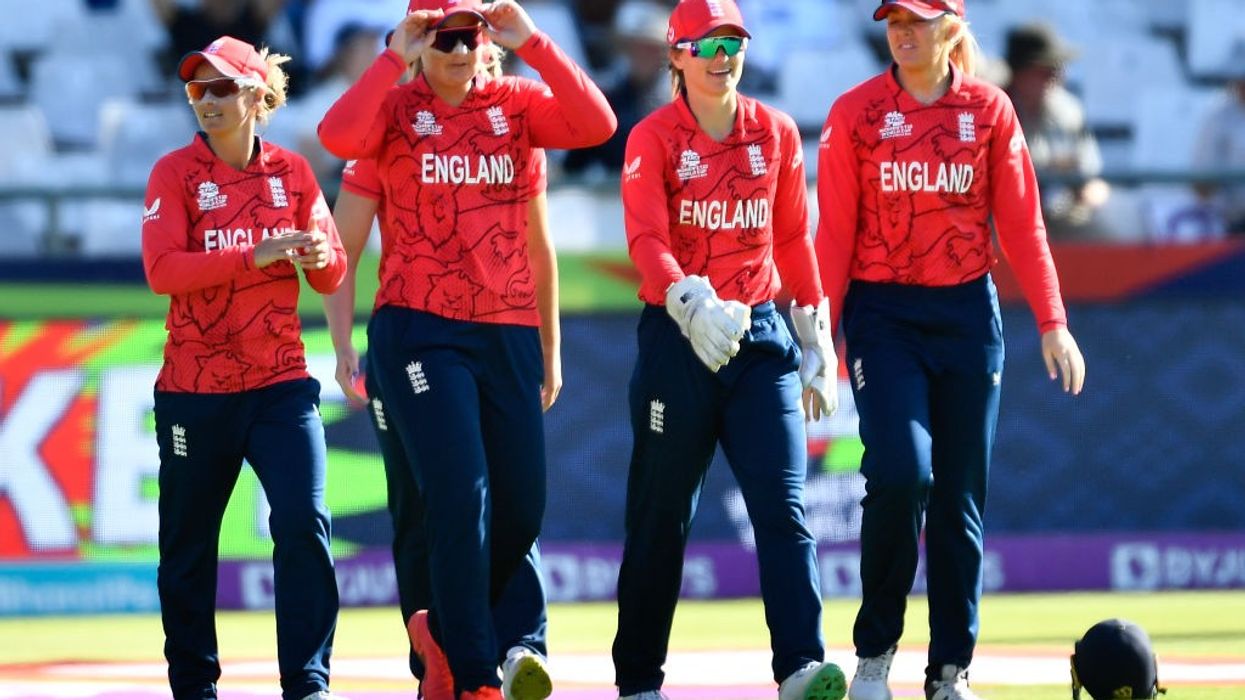

ENGLAND and South Africa qualified to meet in the Women's T20 World Cup semi-finals after both teams won their final group matches at Newlands in Cape Town on Tuesday (21).
England -- who were already assured of a place in the last four -- clinched top place in Group Two with a crushing 114-run win over Pakistan.
South Africa beat Bangladesh by ten wickets in the second match of a double-header but despite the margin of victory were not entirely convincing.
Group One winners Australia will play Group Two runners-up India on Thursday (23), with England and South Africa meeting on Friday (24).
Both semi-finals and Sunday's final will be played at Newlands.
Nat Sciver-Brunt articulated England’s attacking approach under new coach Jon Lewis after picking up her third player of the match award in four outings.
Sciver-Brunt hit 81 not out off 40 balls as England powered their way to 213 for five, a Women's T20 World Cup record.
"We agreed in our planning to put the pressure back on the other team," said Sciver-Brunt.
"That means we take it to the bowlers, not so much to knock it around and put a partnership together but try to put the bowlers under pressure and play to your strengths."
She said the policy was similarly aggressive with the ball. "We really focus on taking wickets," she said.
'Opening pair played well'
England reduced Pakistan to 54 for seven before number nine batter Tuba Hassan hit 28 to enable them to finish with 99 for nine.
South Africa won with 13 balls to spare after restricting Bangladesh to 113 for six.
Laura Wolvaardt made 66 not out and Tazmin Brits was unbeaten on 50.
"It was a bit of a nervy start," admitted South African captain Sune Luus after a shaky beginning to the host team’s innings which followed a less than imposing performance in the field.
"But we backed them and they are world-class players," Luus said of the opening pair.
Luus also praised the South African bowlers, saying: "They were excellent, 113 was below par on this wicket."
South Africa, New Zealand and Sri Lanka all had two wins from their four matches in Group One but South Africa had a superior net run rate to finish second in the group behind unbeaten Australia.
No Bangladesh batter was able to score more than captain Nigar Sultana’s 30 but aggressive running between wickets enabled them to keep the score moving, aided by some nervy errors in the field by South Africa.
"We weren't able to score enough runs in the power play," said Nigar.
There were anxious moments for South Africa at the start of their innings.
Wolvaardt was given out leg before wicket to Marufa Akter, Bangladesh’s impressive 18-year-old opening bowler, before a run had been scored but survived on review.
Tazmin Brits was dropped off Nahida Akter in the next over and Wolvaardt should have been run out in the third over.
"When you are defending a small total you need to take all your chances," said Nigar.
(AFP)