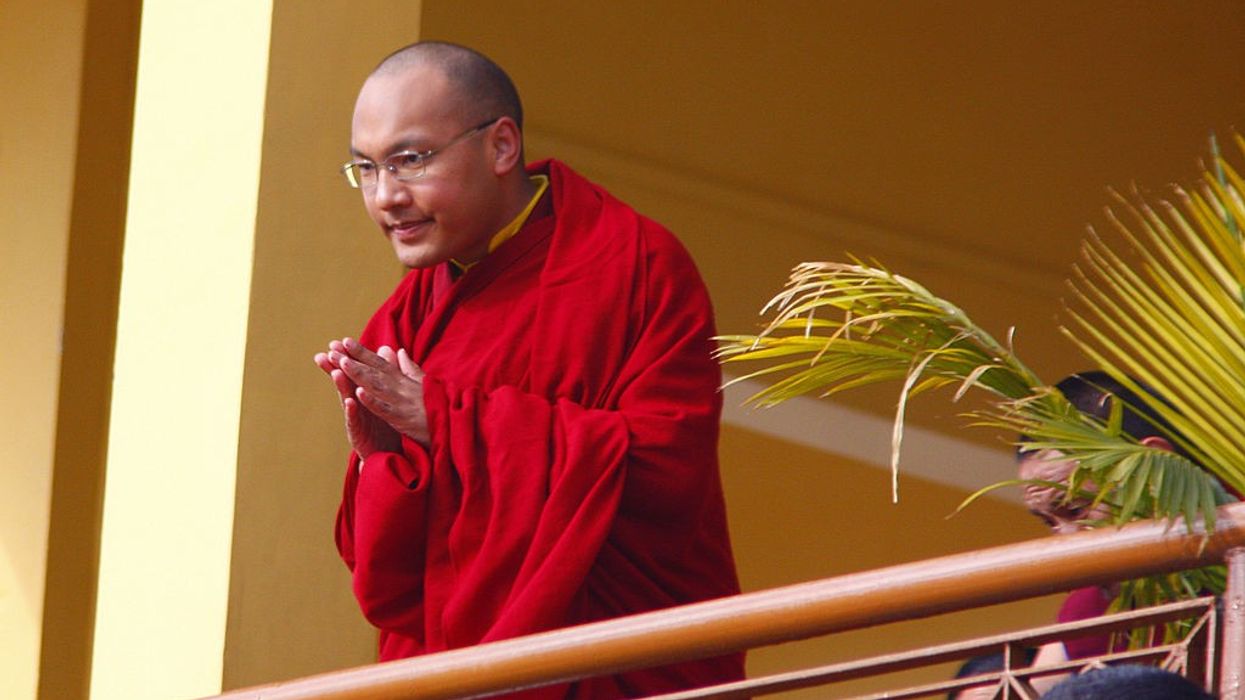

A potential successor to the Dalai Lama can be sued for maintenance and child support by a former nun, a Canadian court has ruled.
Vikki Hui Xin Han, who now lives in British Columbia, has alleged that she became pregnant after Ogyen Trinley Dorje sexually assaulted her at a monastery in New York in 2017.
Later it evolved into a “marriage-like relationship”, carried out online, during which he sent her more than $700,000, according to a supreme court ruling in the province.
Han is allowed to amend her child support lawsuit against Dorje — known to his millions of followers as His Holiness - to include spousal support.
Dorje was identified as the 17th incarnation of the Karmapa Lama, the head of one of the four main schools of Tibetan Buddhism, as a child in 1992.
However, Dorje denies having any relationship with Han but acknowledges sending her money “for the benefit of the child the claimant told him was his daughter”, the ruling says.
As The Times reported, none of the allegations have been proven in court.
According to the ruling, Dorje, at the age of 14 fled Chinese-controlled Tibet for the Dalai Lama’s compound in India. He still lives in India.
He is one of the two claimants to his title.






 Kamar Ilyas and Kamran IlyasPhoto: X/NCA