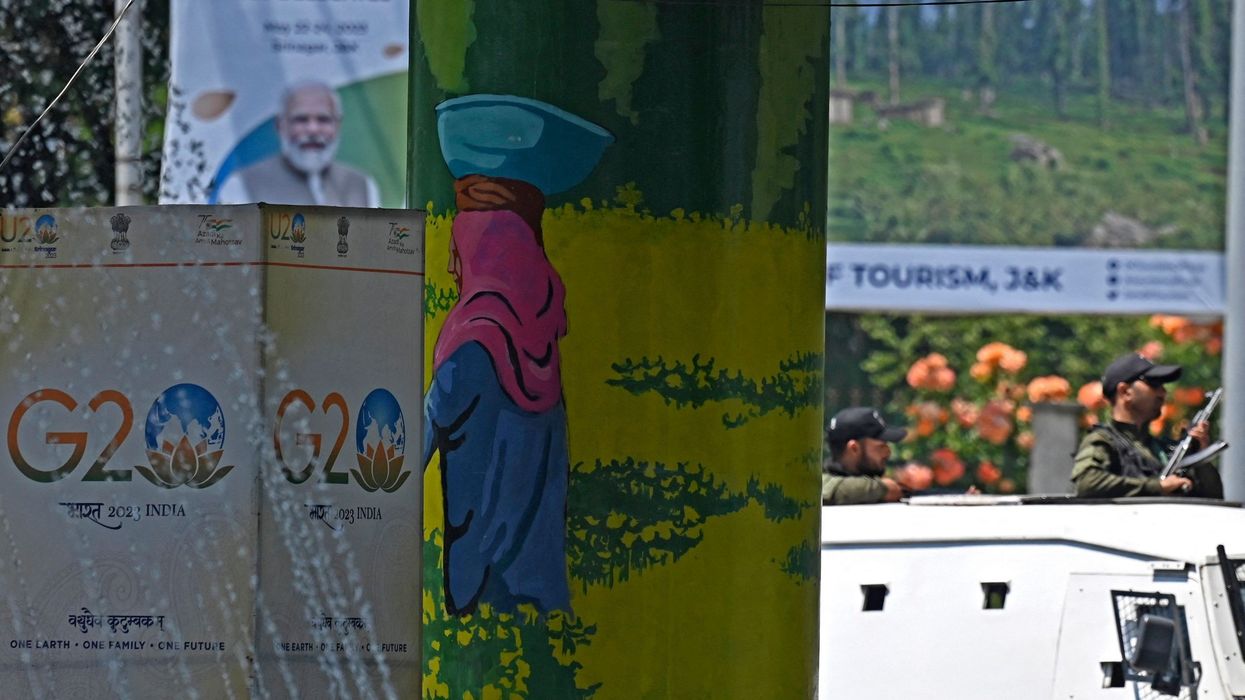

Commencing on Monday (22), a G20 tourism meeting began in Indian-administered Kashmir amidst increased security measures, triggering criticism from China and Pakistan due to the disputed status of the territory.
In anticipation of the G20 meeting, which marks the first diplomatic event in the region since New Delhi's revocation of its limited autonomy and assumption of direct control in 2019, security has been significantly bolstered to mitigate the risk of potential terrorist attacks.
The three-day gathering will be held in a heavily guarded venue situated along the picturesque Dal Lake in Srinagar.
In a symbolic display of perceived stability and tranquillity in the region, roads leading to the event venue have been freshly paved, and the illumination of electricity poles in the colours of India's national flag signifies the officials' assertion of "normalcy and peace returning" to Kashmir.
India has been actively promoting tourism in the region, resulting in over a million Indian citizens visiting Kashmir last year. However, Chinese delegates will not be participating in the meeting.
Tensions between India and its northern neighbour persist, as both nations are currently engaged in a military standoff along their largely unmarked border in the Ladakh region. Additionally, Beijing asserts its claim over the entirety of Arunachal Pradesh as part of Tibet and considers Kashmir as a disputed territory.
"China firmly opposes holding any form of G20 meeting in disputed territory and will not attend such meetings," foreign ministry spokesman Wang Wenbin told reporters on Friday.
Turkey, Saudi Arabia and Indonesia are reportedly also unlikely to join.
As the holder of the G20 presidency for 2023, India has meticulously organised over 100 meetings throughout the country, reaffirming its commitment to successful global cooperation.
Notably, China has chosen to abstain from participating in events held in both Ladakh and Arunachal Pradesh.
Additionally, Pakistan, a non-G20 member, maintains control over a smaller portion of Kashmir and vehemently criticised the decision to hold the tourism meeting in the disputed territory, arguing that it violated international law, UN Security Council resolutions, and bilateral agreements.
Under the intensified security measures, residents have experienced growing discontent, with hundreds being held in police stations, and numerous individuals, including shopkeepers, receiving calls from officials cautioning them against engaging in any form of protest or causing disturbances.
(AFP)