
Skip to content
Search

Latest Stories

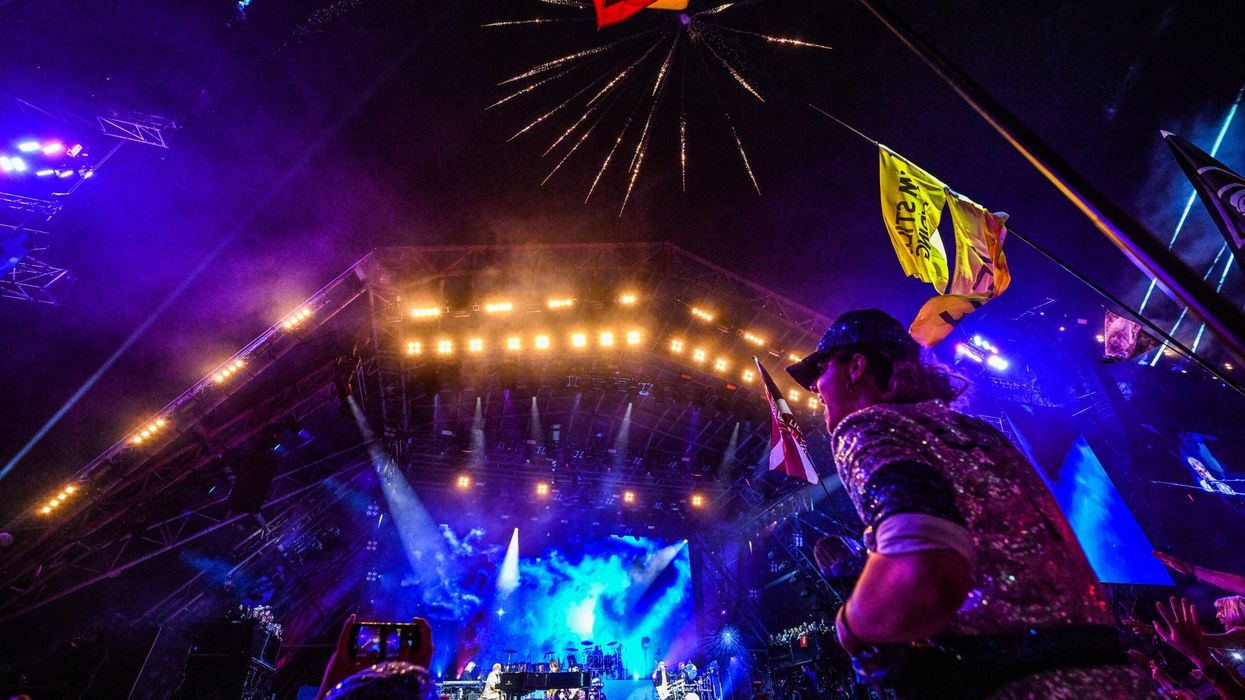
Glastonbury’s Shangri-La announces festival’s first dedicated South Asian space

The six-stage line-up was announced earlier today on April 19, continuing the same theme as last year, “Everything (Still) Must Go, Pt 2, The Sequel.”

Glastonbury’s Shangri-La announces festival’s first dedicated South Asian space

Glastonbury’s Shangri-La has announced its 2024 line-ups and unveiled a brand-new stage, Arrivals, due to feature in the South East corner field for the first time this year.

The new area will be programmed, designed, and built by an entirely South Asian team, as a collaboration between Dialled In, Going South, and Daytimers, offering a “sensory” and “audio-visual” experience with a stage design both nostalgic and futuristic, a press release explains. It will be part of the Shangri-La area of the festival site in Somerset from 26-30 June.


Arrivals' line-up includes Anish Kumar, Baalti, Nabihah Iqbal, Gracie T, Nikki Nair, Bobby Friction, and Raji Rags in 2024.

"This is a seminal moment for UK Festival culture,” says BBC Asian Network presenter Bobby Friction, who called the opening of Arrivals “a dream come true”.

“South Asian and British Asian music have had their own small festivals over the years and some Asian artists have performed in the big gatherings that are now a quintessential part of a British Summer, but a full-on Glastonbury space dedicated to South Asian music, beats and DJs for the entire festival? That's just crazy,” he said.

Earlier this year, London’s Southbank Centre announced a new South Asian music event series taking place in the spring, featuring performances from Anu, Vedic Roots, and more.

The six-stage line-up was announced earlier today on April 19, continuing the same theme as last year, “Everything (Still) Must Go, Pt 2, The Sequel."


More For You

Kerala actress assault case

Inside the Kerala actress assault case and the reckoning it triggered in Malayalam cinema

AI Generated

The Kerala actress assault case explained: How it is changing industry culture in Malayalam cinema

Highlights:

  • February 2017: Actress abducted and sexually assaulted; case reported the next day.
  • Legal journey: Trial ran nearly nine years, with witnesses turning hostile and evidence disputes.
  • Verdict: Six accused convicted; actor Dileep acquitted of conspiracy in December 2025.
  • Industry impact: Led to WCC, Hema Committee report, and exposure of systemic harassment.
  • Aftermath: Protests, public backlash, and survivor’s statement questioning justice and equality.

You arrive in Kochi, and it feels like the sea air makes everything slightly sharper; faces in the city look purposeful, a film poster peels at the corner of a wall. In a city that has cradled a thriving film industry for decades, a single crime on the night of 17 February 2017 ruptured the ordinary: an abduction, a recorded sexual assault and a survivor who reported it the next day. What happened next is every woman’s unspoken nightmare, weaponised into brutal reality. It was a public unpeeling of an industry’s power structures, a slow-motion fight over evidence and testimony, and a national debate about how institutions protect (or fail) women.

For over eight years, her fight for justice became a mirror held up to an entire industry and a society. It was a journey from the dark confines of that car to the glaring lights of a courtroom, from being a silenced victim to becoming a defiant survivor whose voice sparked a revolution. This is not just the story of a crime. It is the story of what happens when one woman says, "Enough," and the tremors that follow.

Keep ReadingShow less