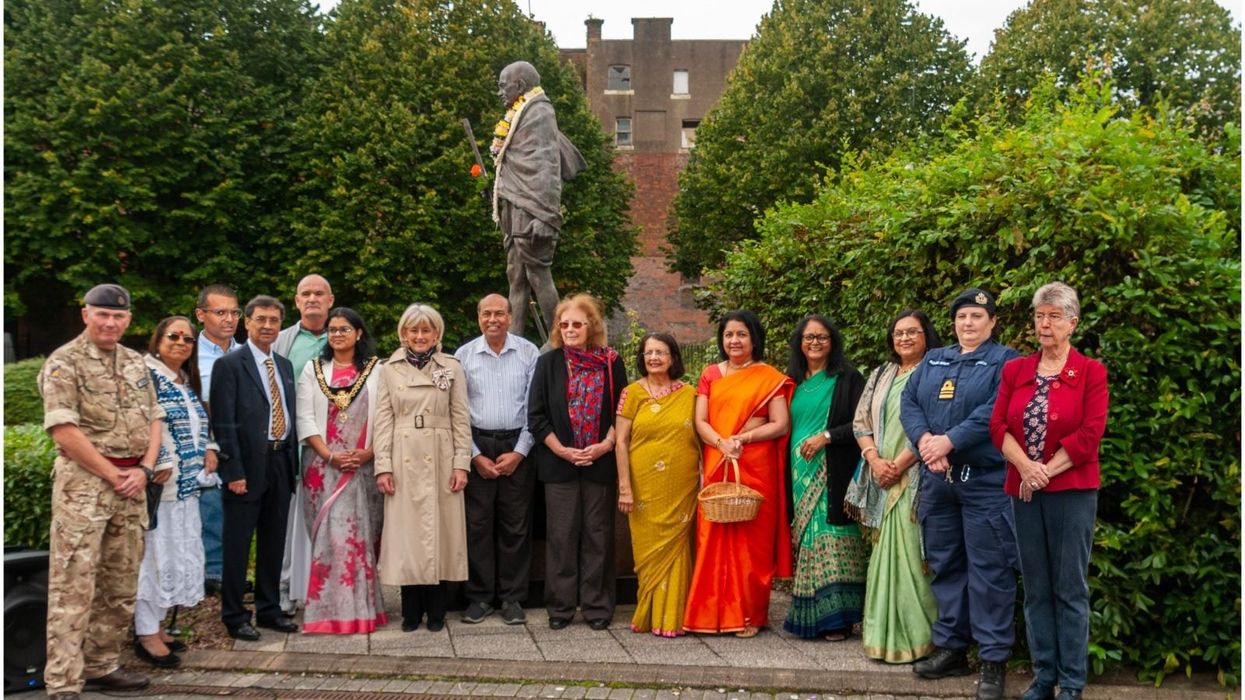

The Hindu Council of Wales (HCW) commemorated International Non-violence Day and Mahatma Gandhi's 154th birthday on October 2, at the Mahatma Gandhi statue in Cardiff Bay.
Since its unveiling in 2018, HCW has marked the day each year, with this year's event attended by dignitaries and the local community.
This year Jane Hutt, Minister of Social Justice and Chief Whip in Wales Senedd, was the Chief Guest accompanied by HM Lord Lieutenant Morfydd Meredith, Julie Morgan AM, Raj Aggarwal (Hon Council of India in Wales), and Lord Mayor of Cardiff Bablin Malik.
Guest speakers paid homage to Mahatma Gandhi and his non-violence ideology while Hutt emphasised the Welsh Government's recognition of the statue's significance, promoting non-violence through public awareness and education.
HCW Chair, Dr Sakti Guha Niyogi, expressed concern about street violence and youth loss in the country, urging political leaders to raise awareness of non-violence among the youth as a long-term solution.
Additionally, during the occasion of Raksha Bandhan, the Hindu festival that celebrates the bond between siblings and families, HCW signed a covenant with the military, demonstrating the community's support for British military service personnel.
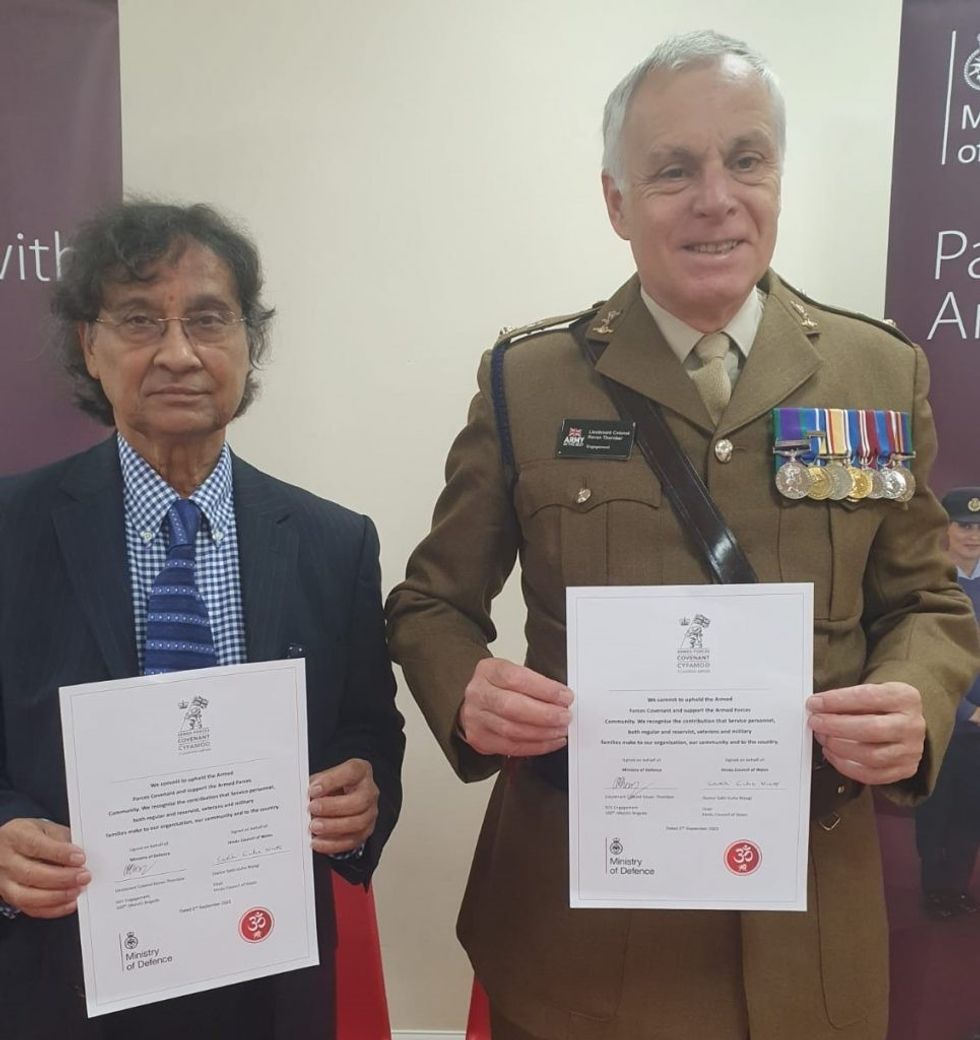
The covenant aims to provide equal opportunities (similar to civilians) for employment, housing, social care, and faith events to the military and particularly ex-service personnel.
HCW celebrated the festival by tying Rakhis on military personnel from various services, to foster goodwill and strengthen the bond between the community and service personnel.
The event served as an opportunity for the community to show their appreciation, honour, and acknowledgment for the care and protection offered to the nation around the clock by the service personnel.