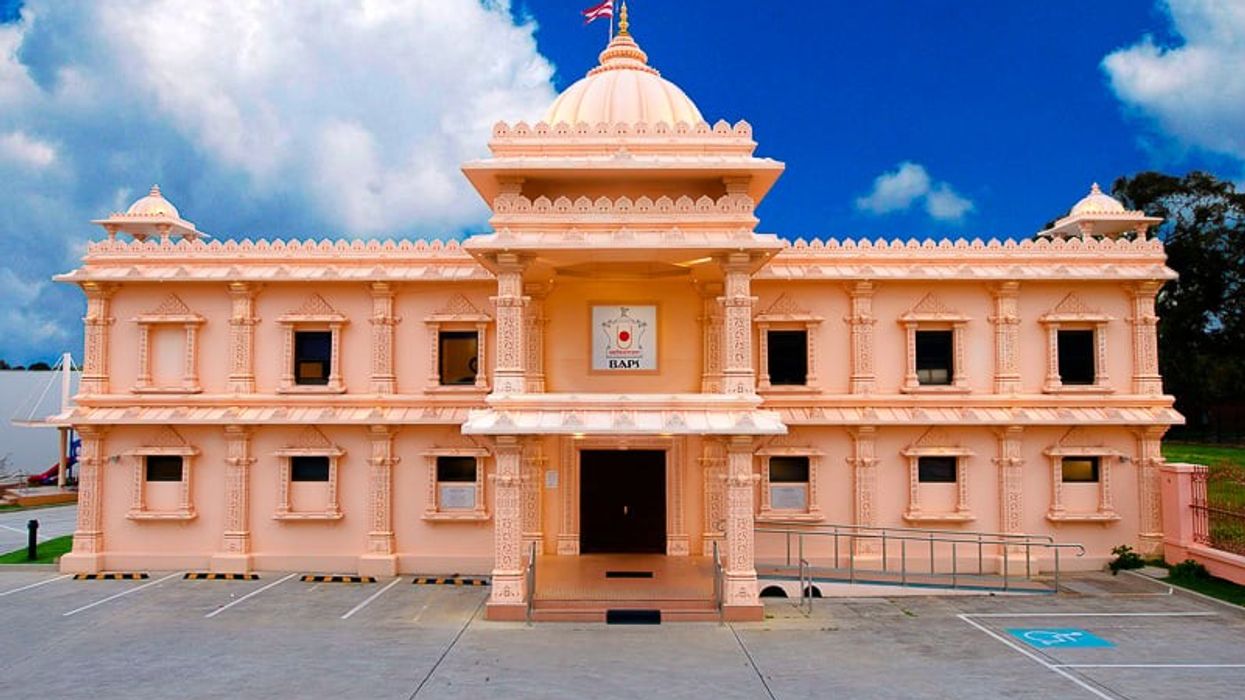

A Hindu temple in Australia has been vandalised apparently by Khalistan supporters in a global pattern of targeting the places of worship of the religious group.
The walls of the BAPS Swaminarayan Mandir in Melbourne were on Thursday found defaced with graffiti calling for 'death to India' and comparing Indian prime minister Narendra Modi to ‘Hitler’.
The vandals also defiled the temple with words praising the slain militant leader Bhindranwale who was responsible for the death of thousands of people in India.
The graffiti read “Hindustan Murdabad” (death to India), “Modi = Hitler” and “Sant Bhindranwale martyr”.
BAPS Mandir LIT With
“Sant Bhindranwale Is MARTYR” “hindu-stan Murdabad”
“#Modi Is Hitler” @cgimelbourne @HCICanberra Is #Indian #iHeartAwards #GoldenGlobes2023pic.twitter.com/IlboEiBaCd@3aw693@Sanity_3@ishaan_ANI@rohini_sgh@Tushar15_
— Hayat (@hayyatayy) January 11, 2023
A regular visitor to the temple in the city's northern suburb told The Australia Today “all walls were coloured with graffiti of Khalistani hatred towards Hindus.”
He said he was “angry, scared and dismayed by the blatant display of religious hatred … by Khalistan supporters.”
BAPS Swaminarayan Sanstha, a global spiritual organisation that runs the temple, said it was “deeply saddened by the anti-India graffiti” written by “anti-social elements”.
It said in a statement that the temple “is an abode of peace, harmony, equality, selfless service, and universal Hindu values”.
It expressed gratitude to the governments of Australia and India as well as local community organisations “for their continued support.”
“BAPS Mandirs across Australia are symbols of a thriving multicultural society which nurture Australian values of respect, mateship and tolerance”, the statement said.
His Holiness Mahant Swami Maharaj, the spiritual leader of the Sanstha, prayed for peace and unity and appealed to all devotees and well-wishers to maintain peace, it said.
Lily D’Ambrosio, a minister in the Australian state of Victoria condemned the vandalism saying, “there is no place in our community for such attacks”.
She reached out to the temple to express her concern about the attack and hoped the authorities would bring those responsible to account.
She said: “Mandir is a very important site for worship across broader Melbourne and is used to host many events that grow a better understanding of the rich diversity of our community amongst all of us.”
The vandalism in Melbourne comes months after a similar desecration of a temple run by the Samstha in the Canadian city of Toronto.
A statue of Indian freedom movement hero Mahatma Gandhi which stood in front of a Hindu temple in New York was found destroyed in August last year.






 Curator Emma Slocombe with ikat robes and arabachi coats in the Peter the Great Room in Blickling Hall Amit Roy
 View of the entrance to Blickling Hall on a rainy autumn dayAmit Roy
 Kente cloth from Ghana in the Long Gallery in Blickling Hall
 Decoration in the Great Hall at Blickling Hall Amit Roy
 Palampore fragment made in coastal south-east India in the Brown Room in Blickling Hall Amit Roy
 Bed valance dating from early 1700s in the Italian Print Room at Blickling Hall Amit Roy
 Indian inspired fabric draped on sofas in the South Drawing Room in Blickling Hall Amit Roy
 Indian inspired fabric draped on sofas in the South Drawing Room with Indian carpet in Blickling Hall Amit Roy
 Karun Thakar has picked out the geometric patterns in the bookcase and the Kente cloth in the Long Gallery in Blickling Hall Amit Roy
 Large tapestry depicting Peter the Great defeating the Swedish army at the Battle of Poltava in 1709 Amit Roy
 ikat robes and arabachi coats in the Peter the Great Room in Blickling Hall Amit Roy
 Baghs and kanthas made by women provide contrast to the men only portraits in the Great Hall at Blickling Hall Amit Roy
 Baghs and kanthas in the entrance Great Hall at Blickling Hall Amit Roy
 Baghs and Kanthas in the Great Hall in harmony with stained glass window at Blickling Hall Amit Roy
 Kimonos reflect Japanese influence in Upper Ante Room in Blickling Hall Amit Roy
 Kimono in Upper Ante Room in Blickling Hall
 A view of the Palace and fort at Agra shows romantic side of India Amit Roy
 Blickling Hall Amit Roy
 Table carpet, European 1670-1680 Amit Roy
 Unfinished 17th century Italian embroidery in the Print Room at Blickling Hall Amit Roy
 Picture of Kashmir shows a romantic view of India Amit Roy
 A panel of Ashburnham bed hangings made in Gujarat for sale in Europe in the Brown Room in Blickling Hall Amit Roy
 Colcha made in the 1600s by women in Bengal for the Portuguese market in the Long Gallery at Blickling Hall Amit Roy




