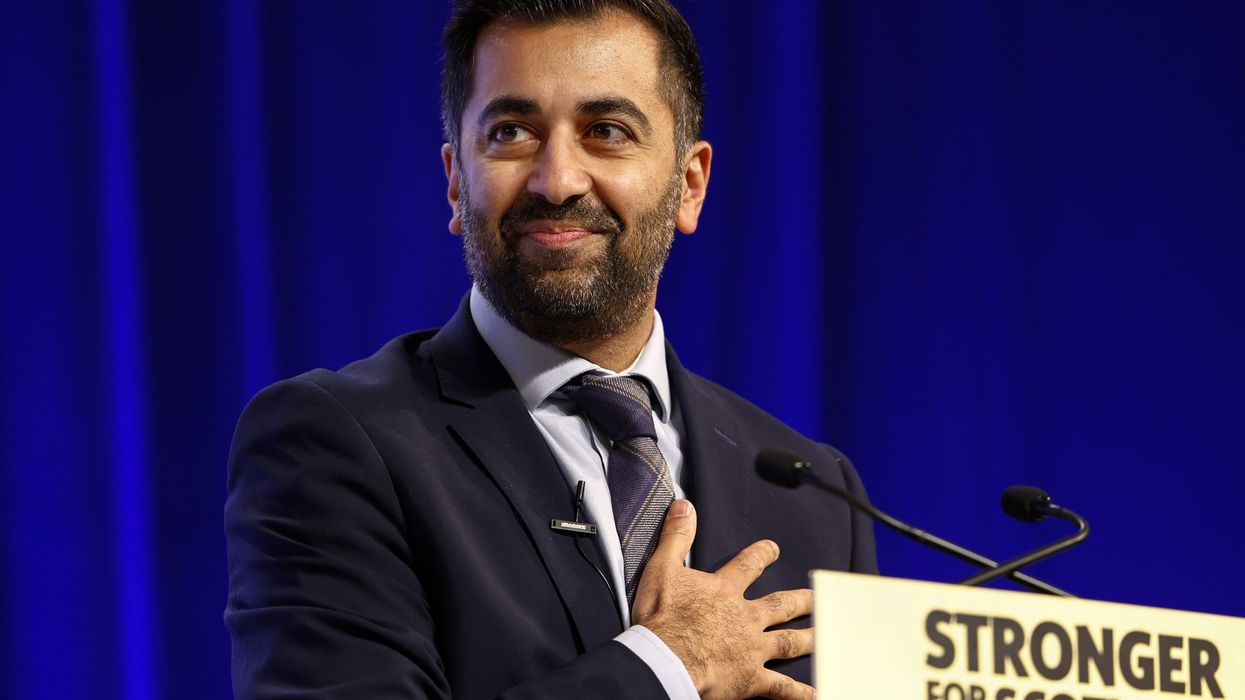

Humza Yousaf, the leader of the Scottish National Party, successfully quelled a party rebellion by MPs by compromising on his independence strategy during the party's 89th annual conference in Aberdeen (from Sunday 15 to Tuesday 17 October 2023).
The compromise states that if the SNP secures a majority of Scotland's Westminster seats in the general election, it will have the mandate to negotiate independence with the UK government, The Guardian reported.
This decision was made after Yousaf dropped his initial proposal, set out in June which suggested the party needed more seats than the next largest Scottish party to win the mandate.
He and Stephen Flynn, the SNP's leader in Westminster, diffused the rebellion by embracing an amendment proposed by seven senior MPs and multiple constituency parties.
The amendment raised the bar, requiring the SNP to secure a minimum of 29 seats out of Scotland's 57 Commons seats.
Yousaf emphasised that the SNP's manifesto would prominently feature independence, positioning it as a response to the Westminster roadblock.
Yousaf said, “line one” of the SNP’s manifesto would read, “Vote SNP for Scotland to become an independent country.”
He said, “We’ve got a Westminster roadblock: if they’re denying us a referendum, let’s use the next general election to put independence front and centre.”
He added that the party's focus will shift away from the process of independence to emphasising the case for it, addressing issues such as the cost-of-living crisis.
According to Flynn this clarity will allow the SNP to connect independence with resolving the cost-of-living challenges, emphasising the link between independence and tackling rising energy bills, food prices, and mortgages caused by Westminster's "incompetence."
He told delegates, “The message could not be clearer.”
However, this new stance, the party's third in as many years, has faced opposition from pro-UK parties. They argue that general elections are not votes on single issues and emphasise that the constitution remains a reserved matter for Westminster, endorsed by the supreme court.
Parties opposing independence also argue that a single small party cannot dictate the future policy of the UK.
Opinion polls have revealed that a minority of Scottish voters saw winning a majority of seats as a mandate, casting doubt on the proposal's effectiveness.
According to a Panelbase poll conducted for the Sunday Times, merely 13% of voters believed that the SNP gaining a majority of seats was a mandate, with only 15% in favour of the "most seats" proposal.
The conference vote also put an end to Nicola Sturgeon's contentious proposal from last year, which suggested that the next general election could serve as a de facto referendum, initiating immediate discussions about separation if the SNP secured a majority of all votes cast.
However, the new policy does not outline the immediate outcomes of winning a majority of seats at the general election. Instead, it states that an SNP majority would authorise the Scottish government to initiate immediate negotiations, aiming to grant democratic legitimacy to Scotland's independence.
This could involve discussions about the UK granting approval for an independence referendum or transferring the authority to hold a referendum to Holyrood.
Simultaneously, the SNP is urged to advocate for increased powers for the Scottish parliament and contemplate the possibility of making the next Holyrood elections a de facto referendum. Additionally, there is a proposal for convening another constitutional convention.
Joanna Cherry, a rebel SNP backbencher openly critical of many of Sturgeon’s policies, hinted at the potential involvement of Alex Salmond’s fringe nationalist party Alba in the constitutional convention. She emphasised the importance of hearing the voices of all minorities in this context.
Pete Wishart, the SNP’s longest-serving MP, emerged as a prominent supporter of Sturgeon’s proposal, asserting that securing a decisive majority of voters would constitute a legitimate and democratic mandate.
According to him, the primary responsibility is to achieve an outcome that signifies the majority of Scotland’s people desire independence as a nation.