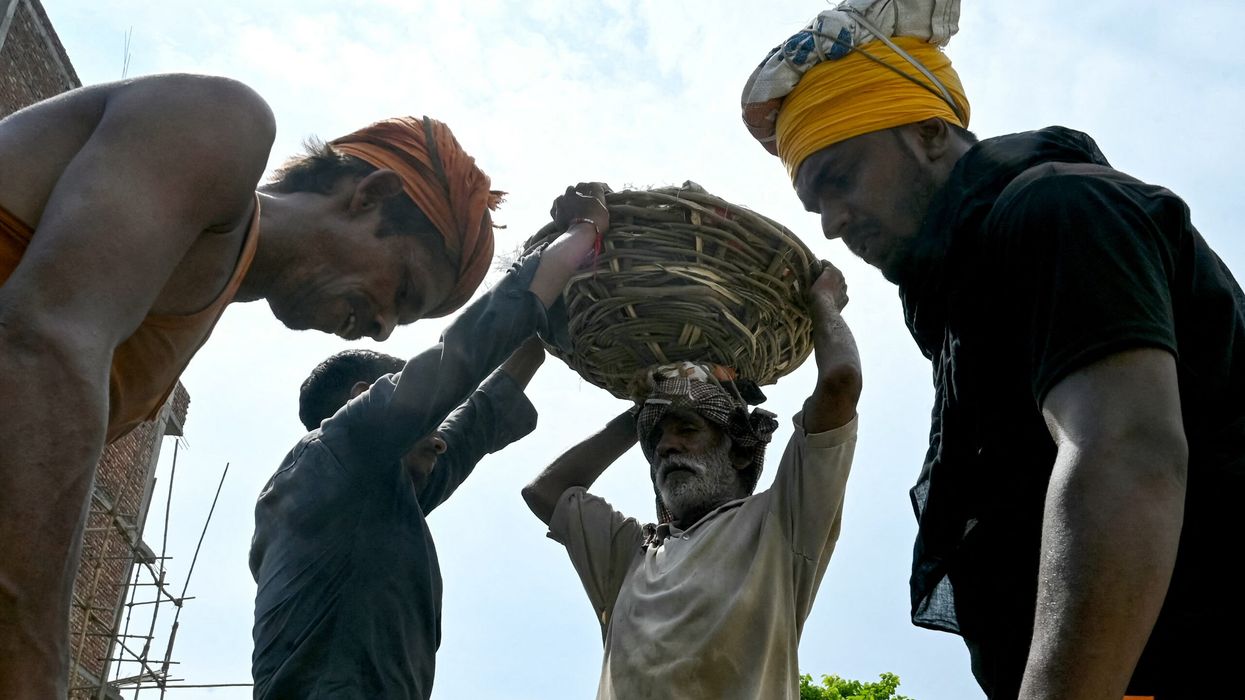

INDIA has announced a hike in minimum wages for workers in informal sectors, including construction, mining, and agriculture, effective from October 1, 2024.
This move is aimed at helping workers cope with the rising cost of living, according to a government statement released on Thursday.
The adjustment follows a 2.40-point increase in the Consumer Price Index (CPI) for industrial workers. Unskilled workers in the highest wage band can expect a daily minimum wage of ₹783 (approximately £6.98), semi-skilled workers ₹868 (£7.74), and highly skilled workers ₹1,035 (£9.23) per day.
The wages are revised twice a year in line with inflation, based on the six-month average rise in the CPI for industrial workers. Earlier this week, thousands of workers protested across India, demanding a wage increase and the repeal of four labour codes that they claim favour multinational corporations.
In addition to the general minimum wage hike, the Union government has also revised the variable dearness allowance (VDA). For unskilled workers in construction, sweeping, cleaning, and similar roles in area 'A', the daily wage will now be ₹783 (£6.98) or ₹20,358 (£181.60) per month. Semi-skilled workers will receive ₹868 (£7.74) or ₹22,568 (£201.27) per month, while skilled workers, clerical staff, and watch and ward personnel without arms will earn ₹954 (£8.51) or ₹24,804 (£221.20) per month.
Highly skilled workers and those in watch and ward roles with arms will now receive ₹1,035 (£9.23) per day or ₹26,910 (£240) per month.
The last revision took place in April 2024, and this new increase comes as part of the government’s twice-yearly wage adjustments, based on the CPI for industrial workers. The revised wages cover workers in sectors such as construction, housekeeping, loading and unloading, watch and ward, sweeping, cleaning, mining, and agriculture within central sphere establishments.
(With inputs from agencies)