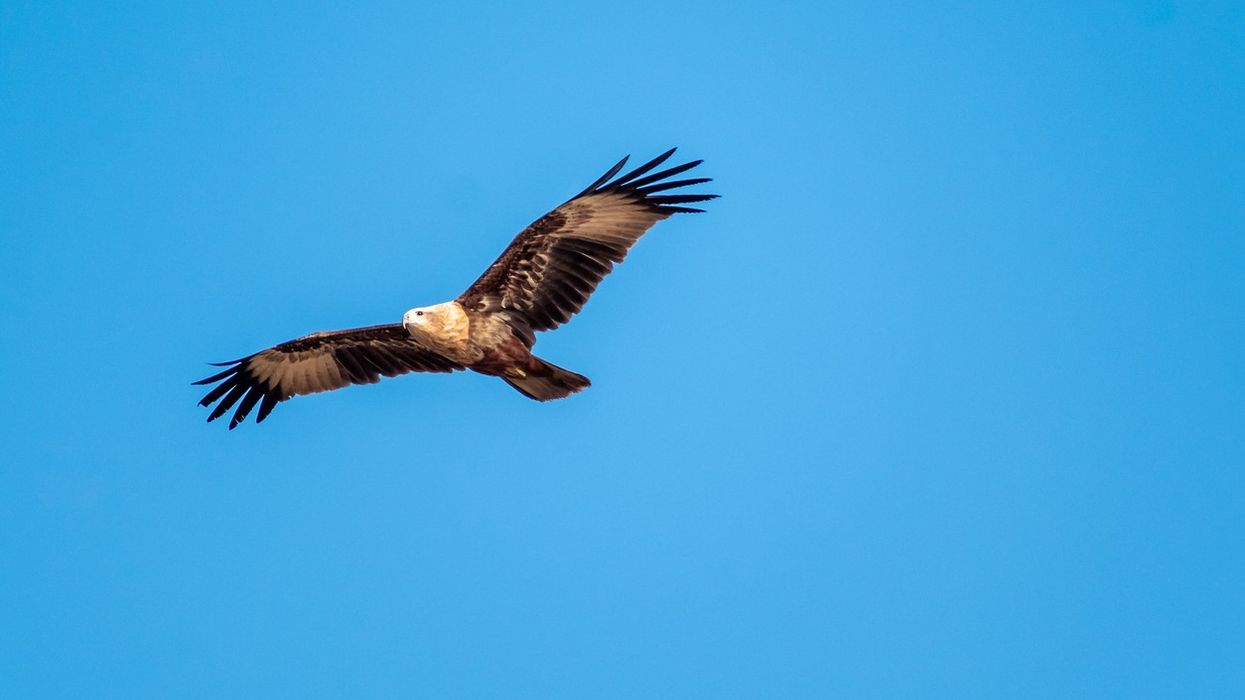

THE Indian army is using kites, a bird of prey from eagle family, to fight drones and carry out surveillance missions, according to Tribune newspaper.
During a joint India-Japan army exercise 'Dharma Guardian' in the Rajasthan state, a kite flew overhead providing real-time imagery and situational awareness to ground troops.
The kite had a small, lightweight camera system attached to its head to provide aerial surveillance reports to ground stations.
The army has trained two kites, named “Arjun” and “Deep”, to intercept drones and provide live feed with a head-mounted camera system connected via secure communication to ground stations.
The unobtrusive presence of birds reduces the risk of detection by enemies.
Conventional drones or aircraft can be detected by enemy radars.
On the other hand, birds possess the ability to navigate complex terrains.
The Indian Army had earlier demonstrated the capability of birds during U.S.-India military exercises in 2022.
This military exercise underlines the growing trend of militaries worldwide incorporating nature-inspired solutions to modern warfare challenges.
Drone usage has transformed warfare in the Russia-Ukraine conflict as they are cheap and unmanned.
Ukraine has been relying on long-range drones to strike targets deep inside Russia as it lacks long-range strike capabilities. Drones are being used to destroy tanks and artillery guns.
Russia too is relying on drones to strike targets in Ukraine.






 Sanjoy K Roy speaks during the eventEastern Eye
 Dame Susan Langley, Lady Mayor of the City of London, speaks during the eventEastern Eye
 Dame Elizabeth Corley with Shaykh Ibrahim Mogra, Chaplain, Canary Wharf Multifaith ChaplaincyEastern Eye