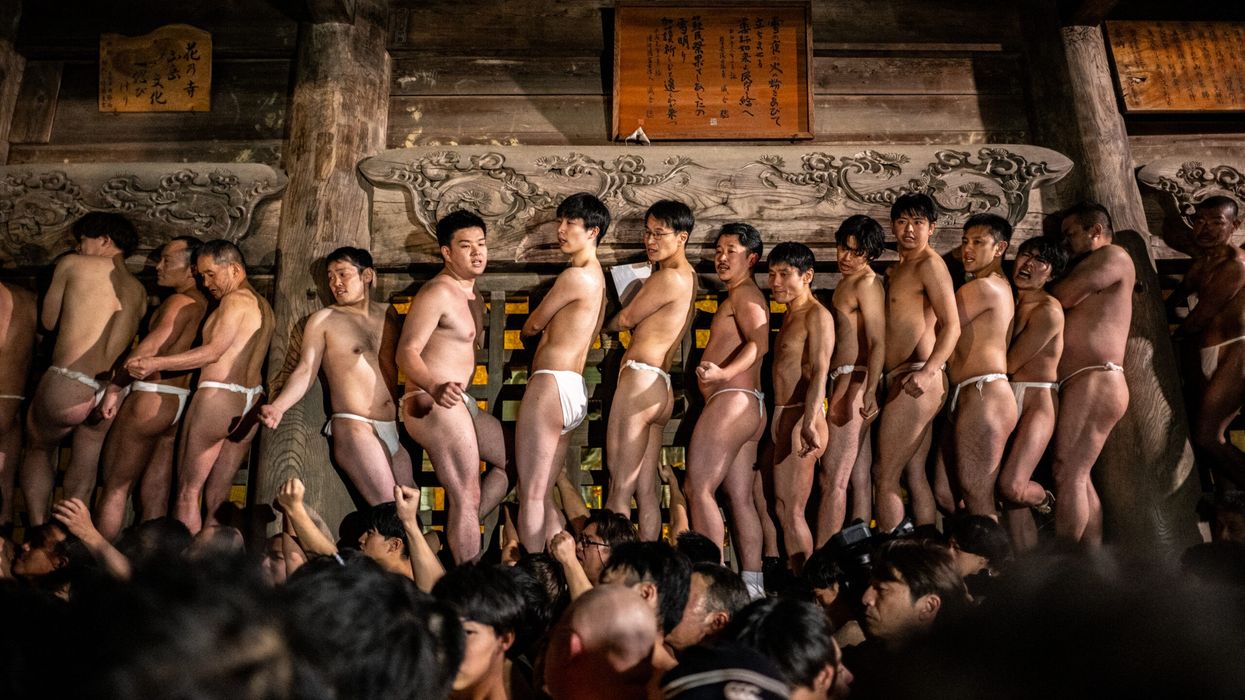

"Jasso, joyaso" (meaning "evil, be gone") chants reverberated through a cedar forest in northern Japan's Iwate region. This age-old tradition, where men clad in loincloths jostle in a 1000-year-old celebration known as the Somin-sai festival, also known as the 'naked man' festival, was celebrated for the last time because of Japan’s ageing population.
For over a thousand years, the Somin-sai festival thrived in the secluded Kokuseki-ji Temple, offering a unique spectacle where participants, dressed in white loincloths, bathe in near-freezing temperatures and jostle for bags of talismans.
Daigo Fujinami, a resident monk of the temple founded in 729, remarked “It is very difficult to organise a festival of this scale. You can see what happened today - so many people are here and it's all exciting. But behind the scenes, there are many rituals and so much work that have to be done."
However, on February 17th, 2024, this vibrant spectacular event bid adieu, becoming the latest casualty of Japan's rapidly ageing population. "I cannot be blind to the difficult reality," added the monk.
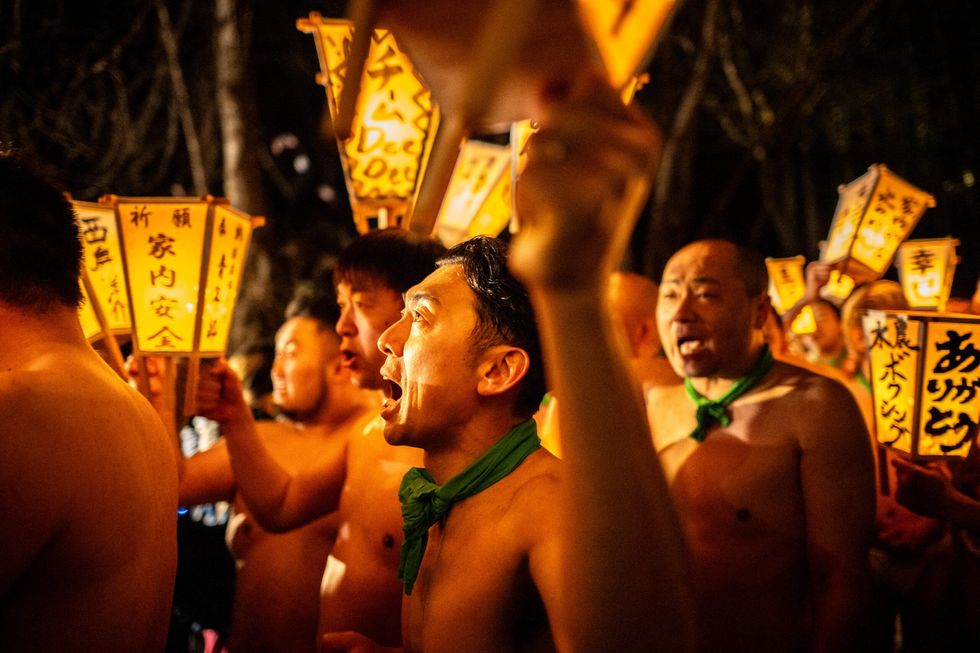 Japan's naked man festival, participants chanting “Jasso, joyaso” (Photo credit: Getty Images)
The decision to end the festival wasn't made lightly, as narrated by the organisers. They struggled with the challenge of finding enough younger participants to handle the demanding preparations and rituals of the event.
"Japan is facing a falling birthrate, an ageing population, and a lack of young people to continue various things. Perhaps it is difficult to continue the same way as in the past," remarked Yasuo Nishimura, a caregiver from Osaka.
The festival used to take place on the seventh day of Lunar New Year and continued till the morning of every year. This year, being the last one, they had to conclude everything by 11 pm.
Despite its final edition, the festival drew a large crowd, with people photographing every moment of the event. Before this, the festival was affected by the pandemic and was reduced to prayers and smaller rituals.
The end of this 1000-year-old tradition reflects a larger crisis gripping Japan - a declining birthrate and an ageing population. With deaths exceeding births for over a decade, the country faces a shrinking workforce and a growing elderly population, posing immense challenges for its future.
While attracting tourists and locals, the burden of organising the event falls heavily on ageing communities. Amidst this fading cultural landscape, glimmers of hope exist that these traditions will someday be revived with a different meaning and perspective.
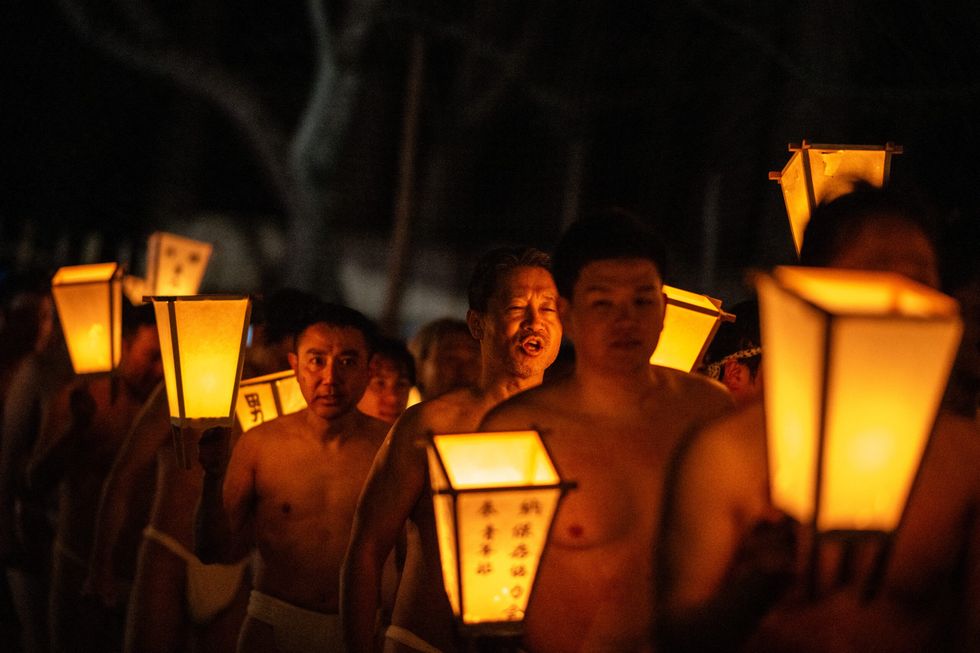 Japan's naked man festival, Somin-sai, men marching outside Kokuseki-ji Temple (Photo credit: Getty Images)
"Even under a different format, I hope to maintain this tradition. There are many things that you can appreciate only if you take part,” said Toshiaki Kikuchi, a resident.
However, even the Hadaka Matsuri festivals face uncertainties concerning the maintenance of traditions and preparations, which involve rigorous arrangements and the energy of the young population.
Hadaka Matsuri festivals are adapting by welcoming women into previously male-only ceremonies and adjusting rituals to accommodate changing demographics and social norms. (AFP)









Netanyahu faces backlash for calling Britain ‘Islamic Republic’