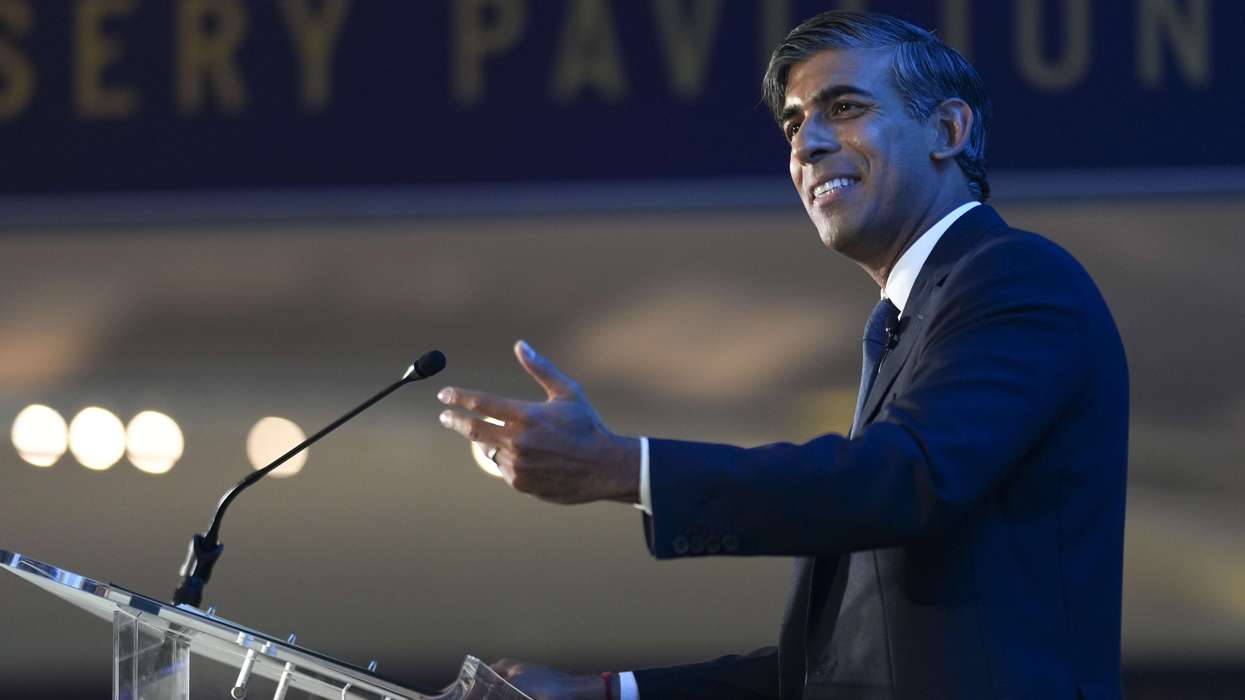
BORIS JOHNSON has said "tools of enforcement" could be required on use of face coverings in enclosed public spaces such as shops.
Currently, it is mandatory to wear face masks or coverings only on public transport in most regions of the UK, but there has been pressure to impose the norm at a wider level.
"Masks have a great deal of value in confined places," the prime minister said, when asked about face coverings during a visit to ambulance staff in central London on Monday (13).
"I do think that in shops it is very important to wear a face covering. Yes -- face coverings I think people should be wearing them in shops.
"In terms of how we do that, whether we make it mandatory or not, we will be looking at the guidance and will saying a little bit more in the next few days."
Johnson added that the people of UK had "shown amazing sensitivity towards other people and understanding of the needs to get the virus down by doing things cooperatively".
"Wearing masks is one of them," he said. "It's a mutual thing; people do see the value of it. We'll be looking in the next few days about exactly how – with what tools of enforcement – we think we want to make progress."
Johnson had made similar remarks during a social media People’s Prime Minister’s Questions session as he indicated plans for stricter norms.
"I do think we need to be stricter in insisting people wear face coverings in confined spaces where they are meeting people they don''t normally meet," he said on Friday.
However, on Sunday, Cabinet Office Minister Michael Gove, seemed to dismiss the idea of imposing a new norm on face coverings even as he urged people to use them as "basic good manners".
"I don't think mandatory... no... but I would encourage people to wear face masks when they are inside, in an environment where they are likely to be mixing with others and where the ventilation may not be as good as it might," he said.
The Labour Party said it will back strict enforcement of face covering norms, and blamed the government over a lack of clarity on the subject.
"People want to do the right thing, but they want to know what the right thing is," said shadow cabinet office minister Rachel Reeves.
Notably, many scientists have called for a stringent approach to face coverings as a vital tool to prevent a second wave in the UK.
Last week, Nobel laureate Prof. Venki Ramakrishnan had warned that the UK was "way behind many countries in terms of wearing masks and clear policies and guidelines about mask wearing for the public".
"The public have taken to handwashing and distancing but remain sceptical about face coverings," said the Royal Society president, adding that the concept should be like wearing seatbelts, or not driving after drinking.
"Just treat it as another item of clothing that is part of the new normal and wear it whenever you cannot socially distance safely. It the right thing to do, and a small price to pay, to help keep infections down and the economy open in the pandemic."



 BAPS
BAPS