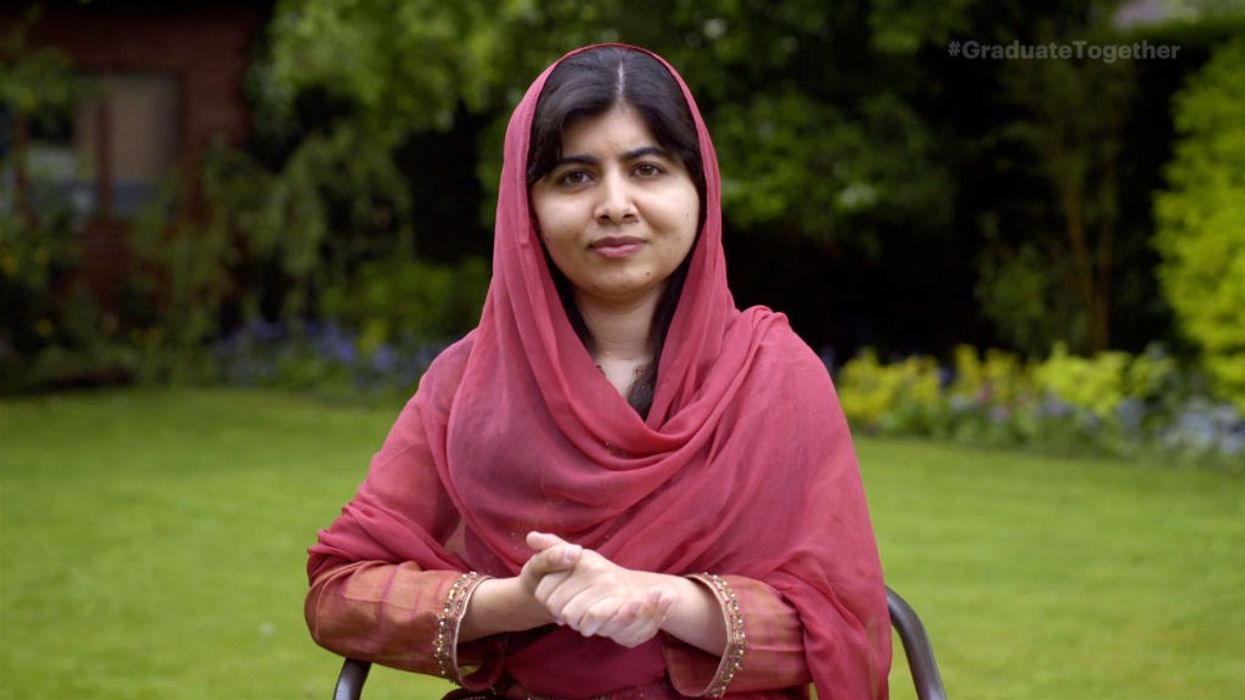

NOBEL Prize laureate Malala Yousafzai on Tuesday (17) said she feared for “my Afghan sisters" in the wake of the Taliban's stunning takeover of the country.
"We will have time to debate what went wrong in the war in Afghanistan, but in this critical moment, we must listen to the voices of Afghan women and girls. They are asking for protection, for education, for the freedom and the future they were promised," Malala, 24, wrote in an op-ed published in The New York Times.
"We cannot continue to fail them. We have no time to spare."
Malala, long an advocate for girls' education, survived a Pakistani Taliban assassination attempt when she was just 15 years old when the militants shot her in the head in rural northwest Pakistan.
Since then the Oxford graduate has become a global figure promoting education for girls.
The Taliban took effective control of Afghanistan on Sunday (15) when president Ashraf Ghani fled and the insurgents walked into Kabul with no opposition.
It capped a staggeringly fast rout of the country's major cities in just 10 days, following two decades of war that claimed hundreds of thousands of lives.
The Taliban led a pariah regime from 1996 to 2001, infamous for a brutal rule in which girls could not go to school, women were barred from taking up jobs that would put them in contact with men, and people were stoned to death.
The recent takeover has triggered fears of renewed oppression, in particular towards women and girls.
"I cannot help but be grateful for my life now," wrote Malala.
"After graduating from college last year and starting to carve out my own career path, I cannot imagine losing it all - going back to a life defined for me by men with guns," she said.
"Afghan girls and young women are once again where I have been - in despair over the thought that they might never be allowed to see a classroom or hold a book again."
On Tuesday (17), a Taliban spokesman indicated the militants would not make the full burqa - a one-piece overgarment that covers the entire head and body - compulsory and sought to dismiss concerns that women would be barred from education.
Women "can get education from primary to higher education - that means university. We have announced this policy at international conferences, the Moscow conference and here at the Doha conference (on Afghanistan)," Suhail Shaheen said.
But Malala raised skepticism of that vow.
"Given the Taliban's history of violently suppressing women's rights, Afghan women’s fears are real," she wrote.
"Already, we are hearing reports of female students being turned away from their universities, (and) female workers from their offices."