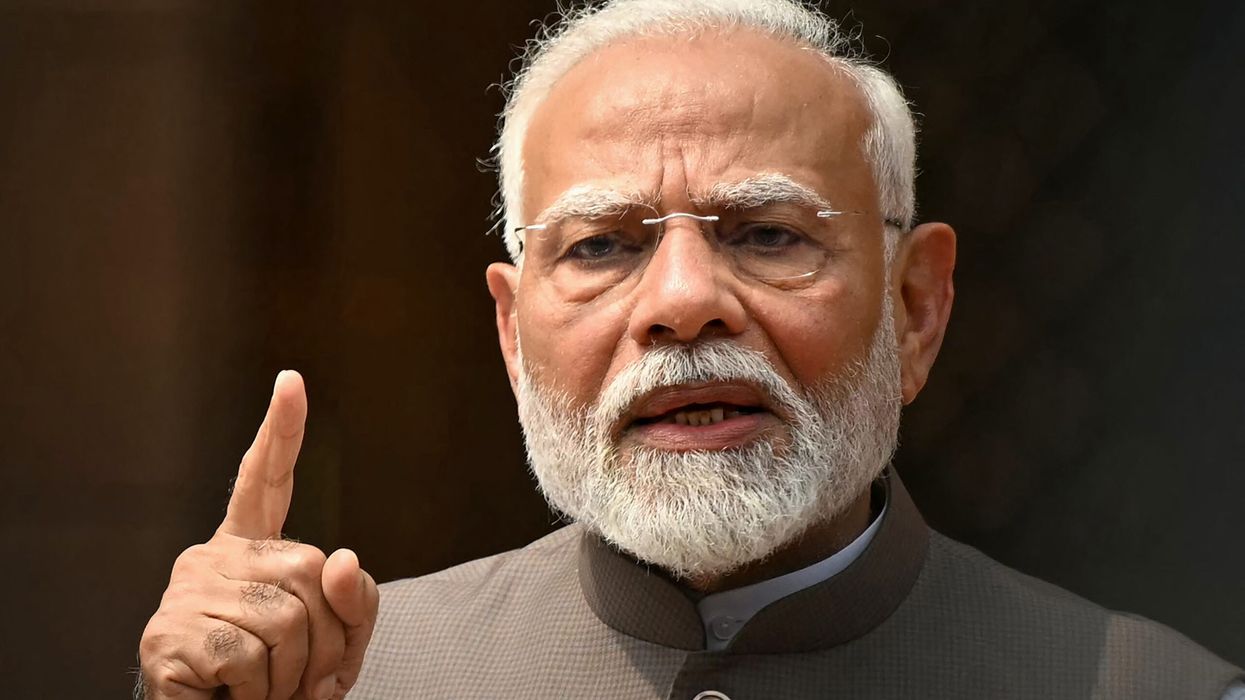

INDIAN prime minister Narendra Modi urged for the restoration of peace as he embarked on a visit to Ukraine on Wednesday (21).
This trip comes just weeks after Kyiv criticised him for warmly embracing president Vladimir Putin during his recent visit to Russia, a nation with which India shares deep-rooted ties.
Before reaching Ukraine on Friday, the 73-year-old leader will make a stop in Poland. This journey marks Modi's first visit to Ukraine since the onset of the conflict.
"As a friend and partner, we hope for an early return of peace and stability in the region", Modi said on social media.
Balancing India’s longstanding alliance with Russia and the pursuit of closer security ties with Western nations, Modi’s approach reflects the complexities of India's foreign policy, particularly in the context of countering China's regional influence.
His government has avoided explicit condemnations of Russia's invasion of Ukraine in February 2022, instead urging both sides to resolve their differences through dialogue.
It will be Modi's first visit to Ukraine, and he said he would discuss with president Volodymyr Zelensky "perspectives on the peaceful resolution of the ongoing Ukraine conflict", as well as the "deepening the India-Ukraine friendship".
Modi's visit to Moscow in July came hours after a Russian barrage hit multiple cities across Ukraine, killing more than three dozen people and heavily damaging a children's hospital in Kyiv.
Modi was pictured hugging Putin at his country residence a day earlier, drawing condemnation from Zelensky.
India and Russia have maintained close links since the Cold War, which saw the Kremlin become a key arms provider to the south Asian country.
Russia has also become a major supplier of cut-price crude oil to India since the Ukraine conflict began, providing a much-needed export market after the imposition of Western sanctions.
That has dramatically reconfigured their economic ties, with India saving billions of dollars while bolstering Moscow's war coffers.
However, Russia's fight with Ukraine has also had a human cost for India.
New Delhi has pushed Moscow to return several of its citizens who signed up for "support jobs" with the Russian military but were later sent to fight on the frontlines in Ukraine.
At least five Indian soldiers have been killed in the conflict.
Western powers have cultivated stronger relations with India as a hedge against China, while also pressuring New Delhi to distance itself from Russia.
India is part of the Quad grouping with the United States, Japan and Australia that positions itself against China's growing influence in the Asia-Pacific region. (AFP)