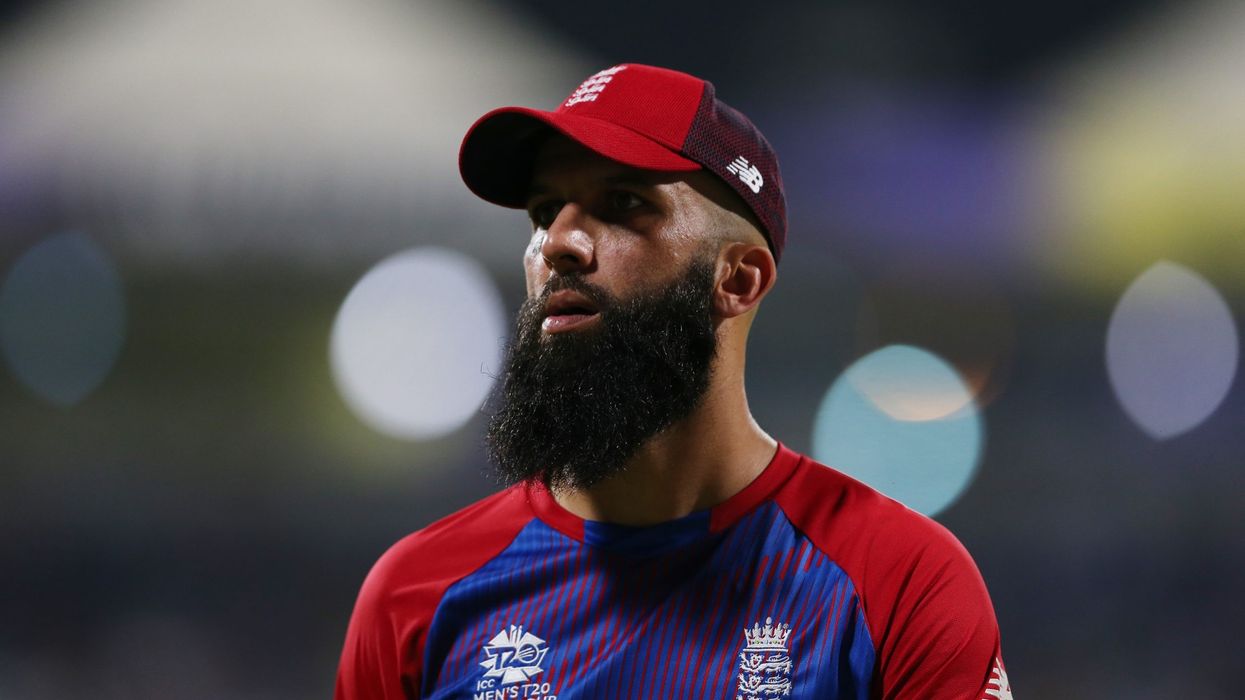

ENGLAND all-rounder Moeen Ali said he was not surprised by the allegations of racism made by Azeem Rafiq against Yorkshire Cricket Club but hopes the issue will lead to change in the sport.
Rafiq, who is of Pakistani descent and a former captain of the England Under-19s, said in September last year that he had received racist abuse and was made to feel like an outsider at Yorkshire.
The 30-year-old also said he had contemplated suicide.
England's cricket board last week suspended Yorkshire from hosting international or major matches over their handling of Rafiq's allegations, while former chairman Roger Hutton resigned and was replaced by Kamlesh Patel.
"I wouldn't say I'm surprised but there's probably more stories out there that people haven't heard of," Moeen told a news conference on Monday (8).
"The fact it's come out is great because, going forward, people (will) have to think about what they can or can't say in terms of discriminating against people and knowing what people feel and go through.
"What Azeem has done, he is not doing it for any personal gain, I think he wants change and that's what he's pushing for."
After a nearly year-long inquiry into the allegations, Yorkshire issued a statement in September acknowledging Rafiq had been racially abused, but the following month the club said nobody would face any disciplinary action.
Several sponsors have ended their partnerships with Yorkshire following an independent report into the allegations of racism made by Rafiq.
Rafiq and senior Yorkshire executives have been called to give evidence before a parliamentary Digital, Culture, Media and Sport (DCMS) panel on November 16.
"Sometimes you need to have a bit of a dip to really come out. That's from Yorkshire's point of view as well as the whole cricket community and culture. There's going to be big changes," Sky Sports quoted Ali as saying.
Referring to former England batter Gary Ballance’s admission that he used racist language towards Rafiq, which he “regretted”, Ali said one has to be careful about the language one uses. He felt the environment plays its part in what one speaks, “because when the environment is right, that sort of language doesn't come out”.
"Somebody might take it well and somebody might not. I don't think you should ever use that type of language," said Ali who played alongside Ballance for England.
Ali, an accomplished all-rounder, had a word of praise for the England and Wales Cricket Board (ECB) for trying to make cricket inclusive and open in the multicultural country where “diversity is rife”.
"I know one thing the ECB has always done since I've been playing is to try and really push those boundaries and open up those avenues for everybody, really,” he said.
Ali, who has played 64 Tests, 112 one-day internationals and 43 T20s for England is currently in the UAE where he has helped his team secure a semi-final berth in the ongoing T20 World Cup.