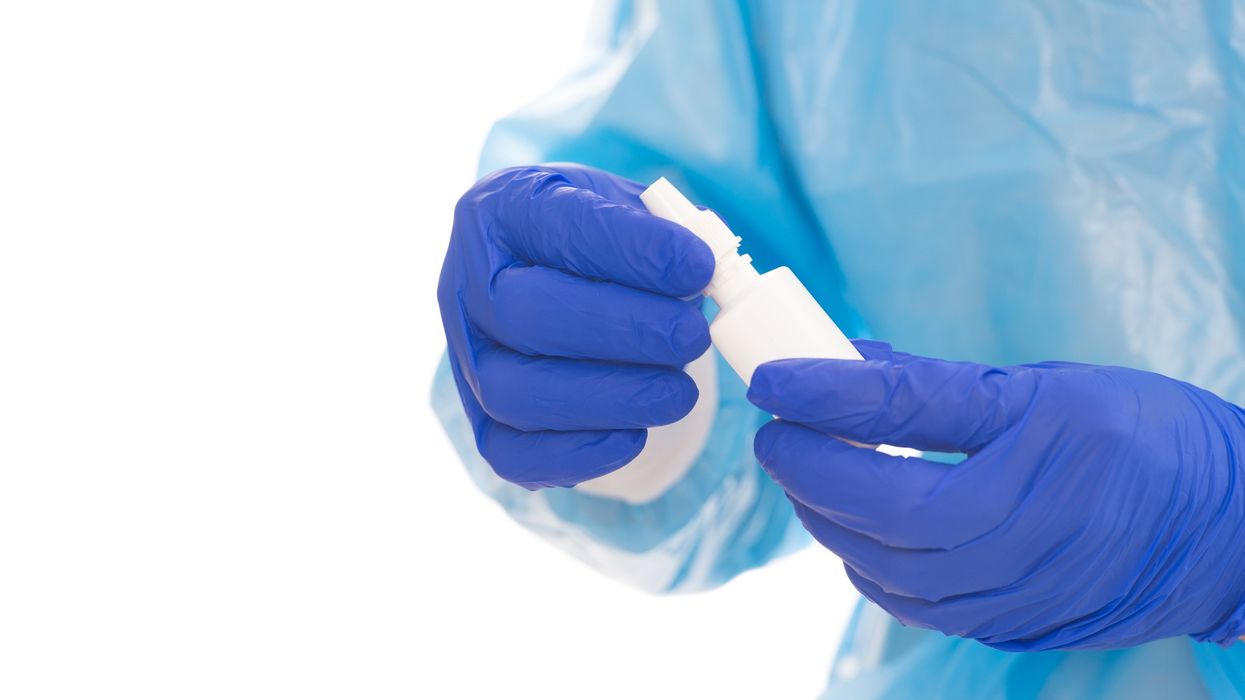

AN anti-viral nasal spray developed by British scientists dramatically cuts the chance of catching Covid.
The inventors of the spray say that two pumps in each nostril gives protection for up to eight hours.
The spray, called the pHOXWELL, the inventors believe can give protection to vulnerable patients in hospitals and care homes.
NHS heart surgeon and entrepreneur Professor Rakesh Uppal, chairman of Raphael Labs, is the firm behind this invention.
Professor Uppal said: "We now have an effective tool, previously missing, to fight this pandemic.
"Vaccination, while absolutely essential, is not 100 per cent effective and it is still possible to become infected by and transmit the virus that causes Covid-19."
The spray was trialled on more than 600 unvaccinated health workers in India at the peak of the second wave. As per the data, those who received pHOXWELL were two-thirds less likely to get infected with Covid over a 45-day period.
The spray would be a big boost to those countries who have not been able to get enough supply of Covid vaccine. Moreover, added benefits being the spray is easy to transport and store in room temperature.
According to laboratory studies the spray kills viruses including Sars-Cov-2 in 30 seconds, also preventing it from getting beyond mucus in the nose.
"Nasal sprays could be the new way of protecting and preventing the spread of viruses," said Áine McKnight, professor of viral pathology at Queen Mary University of London, who was also involved in the project.