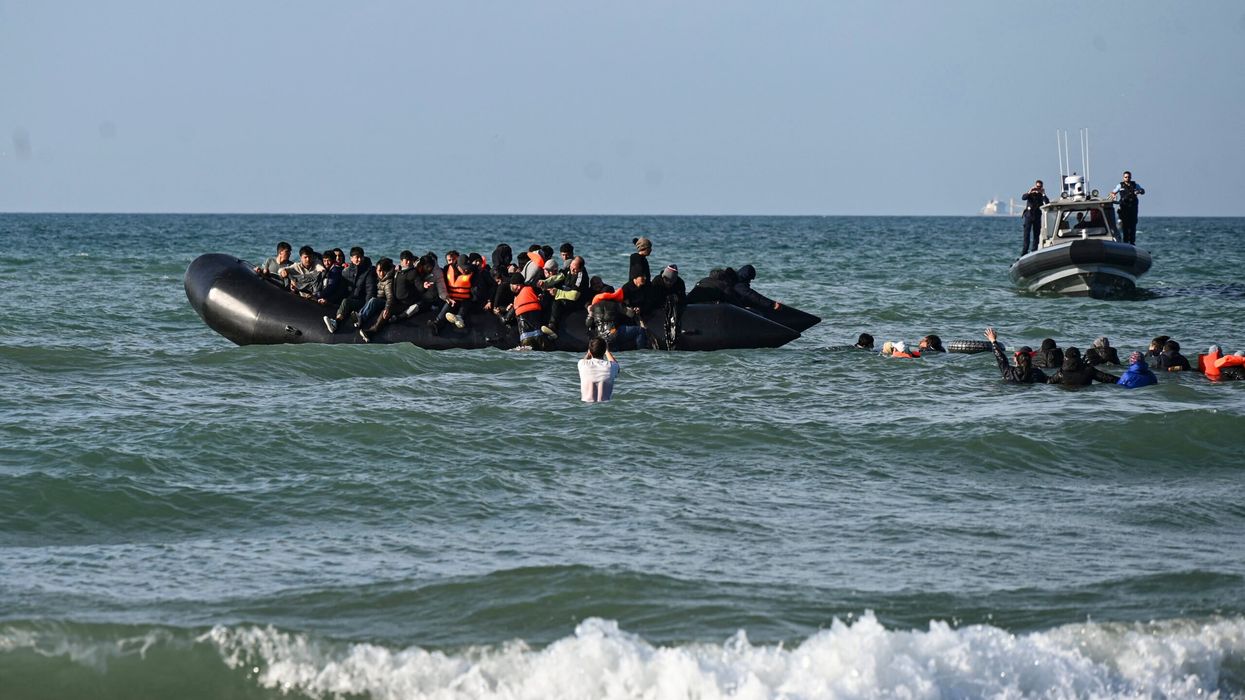

SUSPECTED UK people smugglers could face travel bans and swifter social media and mobile phone curbs, under government plans announced Thursday (2) to reduce cross-Channel migrant arrivals by boat.
The Home Office announced the plan to impose new interim Serious Crime Prevention Orders (SCPOs) on smugglers before they have been criminally charged, the day after figures showed soaring arrival numbers in 2024.
Around 36,816 people were detected crossing the Channel last year, a 25 per cent increase from the 29,437 who arrived in 2023, according to provisional figures from the office.
Currently, imposing SCPOs on criminals, including people smugglers, involves "a complex and lengthy process" that the government said was "restricting the use of this powerful tool".
The planned interim orders -- set to be included in draft legislation introduced in parliament in the coming weeks -- would allow law enforcement agencies to ask a court to impose immediate restrictions while a full order is considered.
Suspects can be banned from using a laptops or mobile phones, accessing social media networks, associating with certain people, or accessing their finances under the orders.
Breaching an interim order could lead to up to five years in prison, the interior ministry said.
SCPOs have been used since 2008 typically to disrupt various types of serious criminality, including knife crime, slavery and trafficking.
Home secretary Yvette Cooper said people smugglers "are profiting from undermining our border security and putting lives at risk" and "cannot be allowed to get away with it".
"We will give law enforcement stronger powers they need to pursue and stop more of these vile gang networks," she said.
However, the interim orders plan faced immediate pushback from some civil liberties campaigners.
Tory MP David Davis, a former cabinet minister, told The Times newspaper it "sounds unnecessarily draconian".
"We'll have to go through the fine text but there's a reason for the process for charging and arrest being properly sequenced before you can do other things and that's to protect the liberty of ordinary law abiding people," he said.
Meanwhile, the Refugee Council on Thursday criticised the UK government's efforts to curb cross-Channel migrant journeys, after last year saw the highest number of recorded deaths in its waters.
The charity said in a new report that the government's stepped-up enforcement efforts had made the crossings "even more dangerous" as smugglers respond by cramming more people "into less seaworthy boats".
It urged ministers to "adopt a mixed approach that combines enforcement with the introduction of safe and legal routes".
(Agencies)