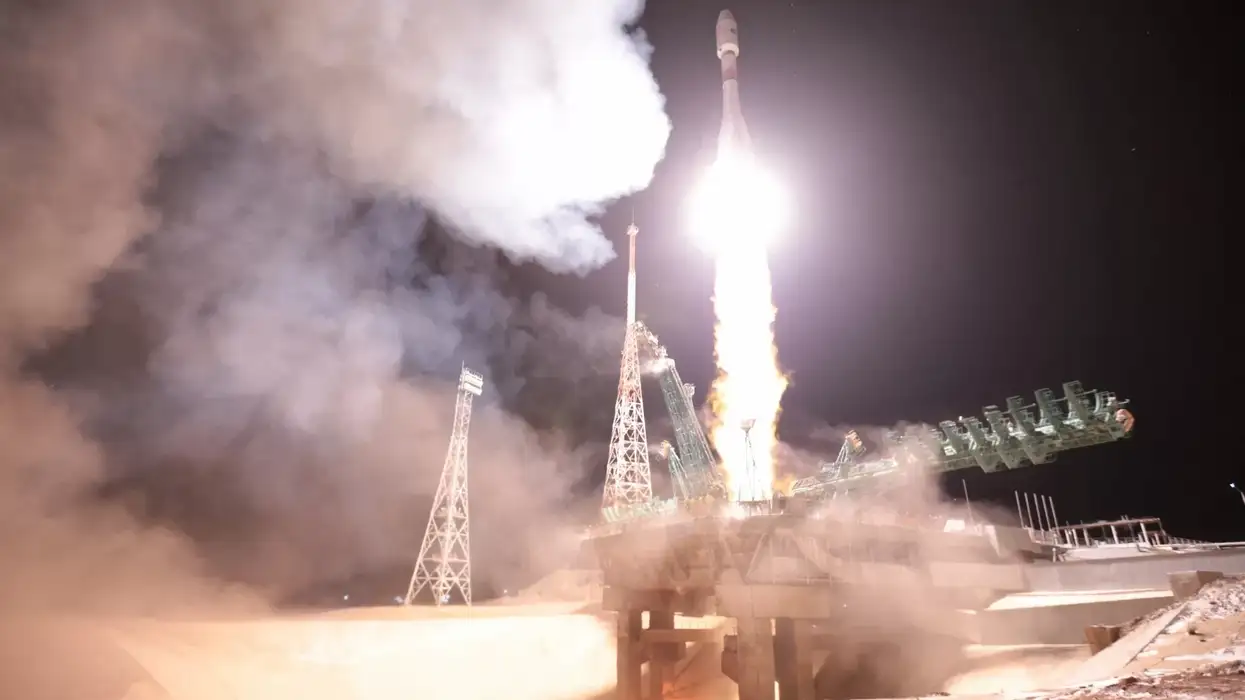

THE LAUNCH of OneWeb’s satellites from Baikonur has been put off to March from January.
Russian space corporation Roscosmos said 36 satellites of the British communications company will be launched on March 5.
"In accordance with the 2022 launch schedule approved by the state corporation Roscosmos, the launch of a Soyuz-2.1b carrier rocket with the Fregat booster and 36 OneWeb satellites from the Baikonur cosmodrome is scheduled for March 5, 2022," Roscosmos said in a statement.
The launch was earlier planned for January but was rescheduled “at the customer’s request”, it said, adding that the satellites are expected to arrive at the spaceport in Kazakhstan on February 10.
However, the reason for postponing the launch is not immediately known.
Dmitry Loskutov, the CEO of Roscosmos’ commercial launch operator Glavkosmos, earlier told Russian news agency Tass that seven launches of OneWeb satellites are scheduled for 2022.
The British company’s orbital cluster comprises 394 satellites, all of them launched by Russian Soyuz carrier rockets. The satellites are designed to create a space-based communications system to provide high-speed internet access in any locality worldwide.
OneWeb, in which Indian telecom giant Bharti Enterprises is the largest single stakeholder, had last launched 36 satellites from Baikonur on December 27.