
Skip to content
Search

Latest Stories

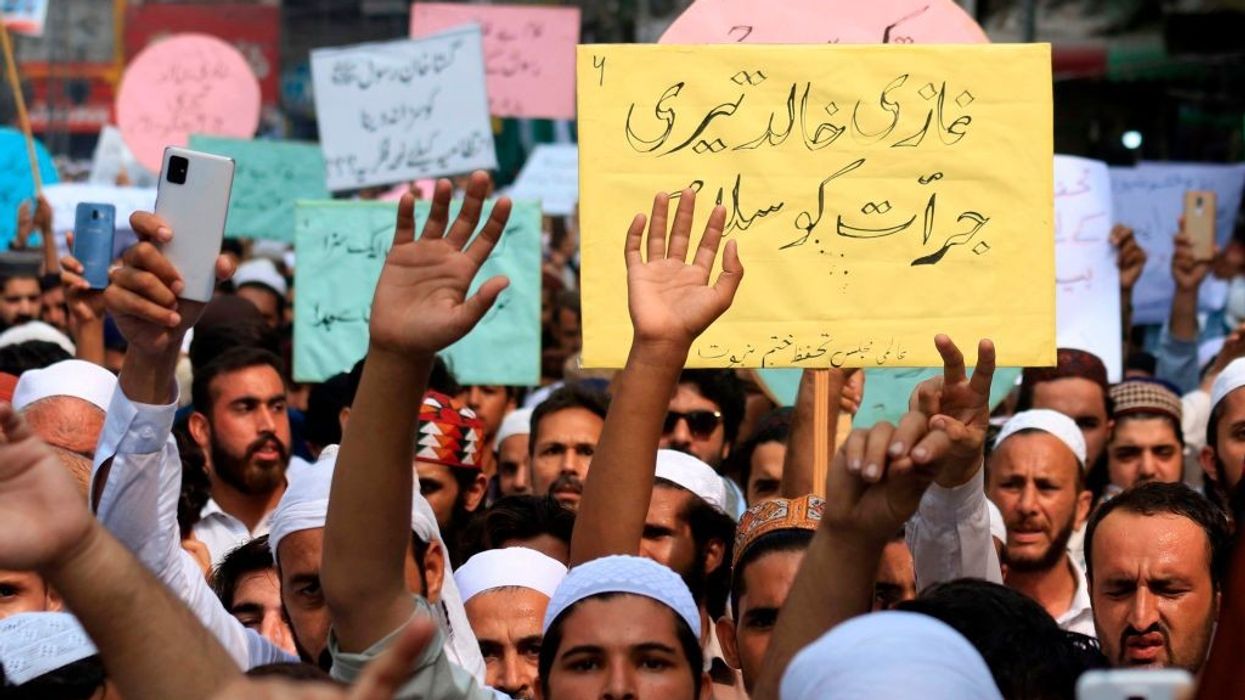
Pakistan woman gets death penalty for blasphemy

Pakistan woman gets death penalty for blasphemy

THE female principal of a Pakistan school has been handed down capital punishment for blasphemy in an eight-year-old case.

Salma Tanveer, who is also the owner of the private school, was charged with distributing photocopies of her writings in her Lahore neighbourhood in 2013, denying the finality of prophethood and claiming herself a prophet.


Her writings contained words considered derogatory and she was arrested following complaints from residents of her area.

A sessions court of Lahore rejected her counsel's argument that she was mentally unsound at the time of occurrence, saying records showed that she was running her school single-handedly till her arrest.

A report of a medical board of the Punjab Institute of Mental Health found the woman fit to stand trial, judge Mansoor Ahmad Qureshi said in his 22-page verdict on Monday (28).

“It is proved beyond reasonable doubt that accused Salma Tanveer wrote and distributed the writings which are derogatory in respect of Holy Prophet Muhammad (PBUH) and she failed to prove that her case falls in exception.”

“Salma Tanveer is sentenced to death,” the verdict said and fined her Rs 50,000 (£217), according to the Dawn newspaper.


More For You

Black and mixed ethnicity children face systemic bias in UK youth justice system, says YJB chair

Keith Fraser

gov.uk

Black and mixed ethnicity children face systemic bias in UK youth justice system, says YJB chair

Highlights

  • Black children 37.2 percentage points more likely to be assessed as high risk of reoffending than White children.
  • Black Caribbean pupils face permanent school exclusion rates three times higher than White British pupils.
  • 62 per cent of children remanded in custody do not go on to receive custodial sentences, disproportionately affecting ethnic minority children.

Black and Mixed ethnicity children continue to be over-represented at almost every stage of the youth justice system due to systemic biases and structural inequality, according to Youth Justice Board chair Keith Fraser.

Fraser highlighted the practice of "adultification", where Black children are viewed as older, less innocent and less vulnerable than their peers as a key factor driving disproportionality throughout the system.

Keep ReadingShow less