
A review into the UK government's scheme set up to prevent terrorism has flagged the radicalisation of UK Muslims over Kashmir and "potentially toxic" pro-Khalistan extremism as some of the areas of growing concern and made recommendations for improvements to tackle Islamist extremism as the "primary threat" to the country.
The review into the government's counter-terrorism early intervention 'Prevent' strategy published this week warned that rhetoric from Pakistan is impacting UK Muslim communities when it comes to "inflaming anti-India sentiment, particularly around the subject of Kashmir".
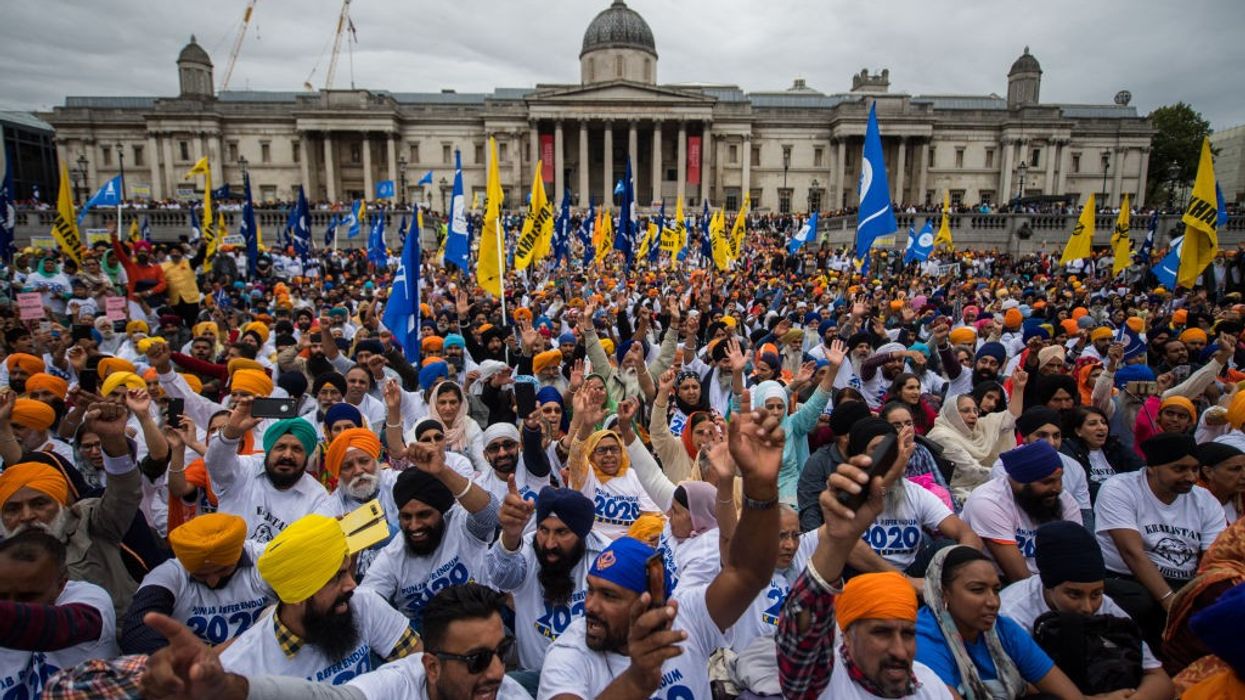
The review carried out by Commissioner for Public Appointments William Shawcross also warns against a false narrative being disseminated by a tiny number of pro-Khalistan groups operating in the UK.
"There is an element of crossover between those who seek to impose limits around blasphemy with those who voice incendiary rhetoric on Kashmir.
"I have seen evidence of UK extremist groups, as well as a Pakistani cleric with a UK following, calling for the use of violence in Kashmir. I have also seen evidence demonstrating that flashpoints related to Kashmir lead to a significant surge in interest from UK Islamists," says Shawcross in the review.
It noted that there is no reason to believe this issue will disappear as a grievance that Islamists will seek to exploit in years to come. "This has potential relevance to Prevent, as there are examples of those convicted of terrorism offences in the UK who had first fought in Kashmir. This includes those who subsequently joined al-Qaeda." On the issue of pro-Khalistan extremism, the report adds, "Prevent should also be mindful of pro-Khalistan extremism emerging from the UK's Sikh communities. A false narrative is disseminated by the tiny number of pro-Khalistan groups operating in the UK that the government is colluding with its counterpart in India to persecute Sikhs." "Such groups' narratives glorify violence carried out by the pro-Khalistan movement in India. While the current threat is low, praise for violence overseas and a simultaneous belief in a state-led campaign of repression domestically is a potentially toxic combination for the future." It comes as the review found that Islamist extremism represents the "primary terrorist threat" to the UK -- "consistently accounting for the majority of terrorist attack plots both carried out and thwarted by the intelligence services". It noted that at present, 80 per cent of the Counter-Terrorism Police network's live investigations are Islamist while 10 per cent are Extreme Right-Wing.
UK Home Secretary Suella Braverman told the House of Commons on Wednesday that she intends to "swiftly implement" all of the recommendations from the review into the Prevent strategy, a UK-wide system set up as an early warning system against terrorist threats.
The review is unflinching. Prevent needs major reform. It needs to better understand the threats that we face and the ideology underpinning them, the Indian-origin minister told MPs.
"The truth is that there is nothing anti-Muslim about tackling Islamism, and we must continue to work closely with Muslim communities if we are to do so effectively," she said.
"While obscuring the Islamist threat, Prevent has defined the extreme right wing too broadly, encompassing the respectable right and centre-right. The threat from the extreme right wing must not be minimised. It is serious and it is growing; it must be robustly addressed. But it is not the same, either in nature or in scale, as the threat from Islamism," Braverman added.
(PTI)