
WHEN we make an attempt to cross the threshold of where we are right now and move into other dimensions of experience, a few things get mixed up.
If you do not develop the necessary discrimination and balance within yourself, handling this mix-up can lead to lots of confusion. You step into a spiritual process and suddenly you don’t know where you belong – you are always confused. It is good if you are confused.
It means you are constantly stepping into new territory. If you live with the familiar forever, there will be certainty. But, certainly there will be no progress.
It is like swinging on the trapeze. When you are swinging on your own trapeze, it is fine. When you let go and try to catch the other, that in-between space is terrible because you are neither here nor there. This is the predicament of people who want to explore, know and experience other dimensions of life.
They want to know the other side, but they are unwilling to release themselves from the familiar even for a moment, so the struggle becomes unnecessarily long.
If you let go of your trapeze and jump, the trapeze on the other side is always in place, so you will catch it. But, instead, if you just keep swinging, if you loosen the grip or hold it with your little finger but never let go, it is torturous.
When I talk about leaving the familiar to explore the new, it does not mean you have to leave your home or office and go somewhere. It is an internal process. Internally, leave things that you have been attached to and identified with. You took the step of turning spiritual only because you felt insufficient. Suppose you were happy and absolutely fulfilled just eating your morning breakfast and drinking coffee, you would not have tried anything else.
Somewhere, a realisation came that this was not enough. You want to know and experience something else. This is not about demeaning your present existence. This is about se- eing the limitations of where you are so that you can move on to the next step of life.
After having made the effort to step into the unfamiliar, there is no point in stepping back into the familiar. When things get mixed up, don’t step back.
If you are stepping into unfamiliar territory on a daily basis, you will always be confused. This confusion needs to be handled properly and productively, rather than becoming a self-defeating process.
You just need more vision to see things clclearly. The ability to see life the way it is does not come for free. Discrimination must be cultivated deliberately; it won’t happen by chance.
If you are a devotee, confusion is not a problem. But such a thing is not possible if your mind questions everything. If that is so, the next thing is to be able to clearly see what is true and what is not, not from past experiences and conditionings of life, but out of a very keen sense of discrimination.
If you want to do this, first you should have developed a razor-like intellect so that you can cut things clean across and see. If you have a blunt knife, you cannot do this. It will mess up everything. It won’t give you a vision of anything.
If these two things are not possible, you must give yourself to activity. Simply serve whatever you see as meaningful. Or, the next possibility is that you crank up your energy to such a pitch that your mind says something, your emotions say something else, but your energies are so cranked up it doesn’t matter.
Your mind can be wrong, you know that. It has been wrong any number of times and it continues to be wrong, but your life energies cannot be wrong.
Your life energies do not know any right and wrong. They know only life and life alone – whether it is low pitch or high pitch is the only question.
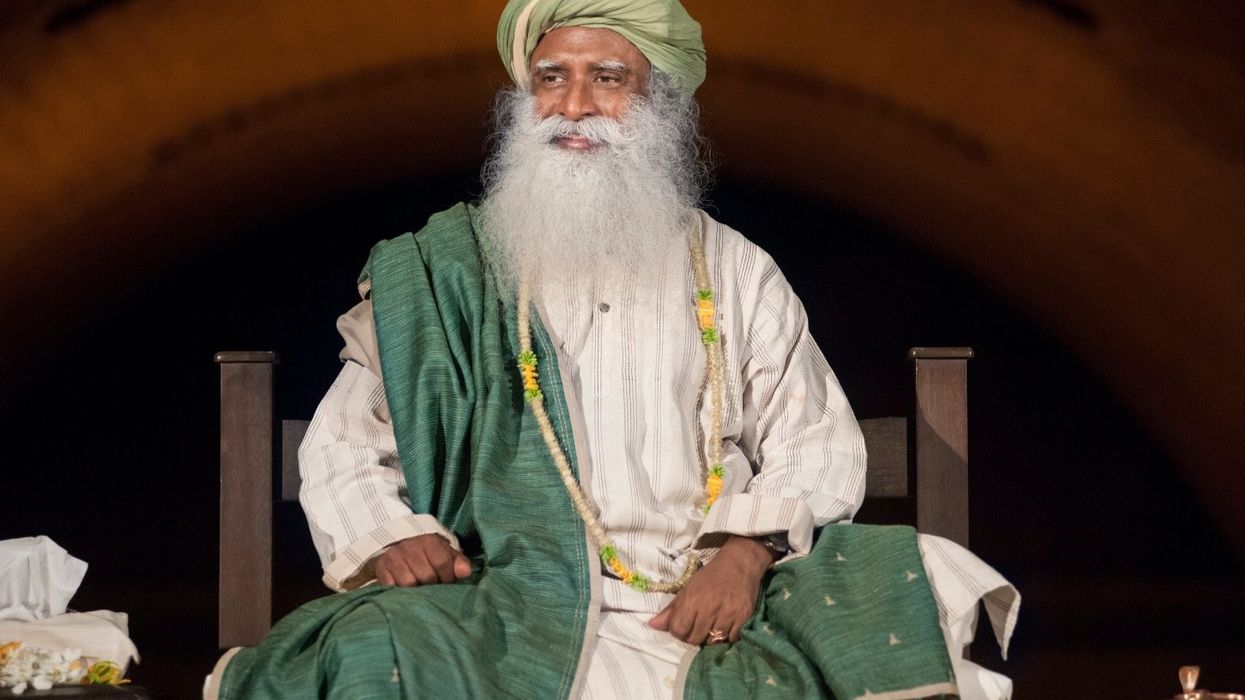
Ranked among the 50 most influential people in India, Sadhguru is a yogi, mystic, visionary and bestselling author. He was honoured with the Padma Vibhushan, India’s highest civilian award, in 2017, for exceptional and distinguished service.