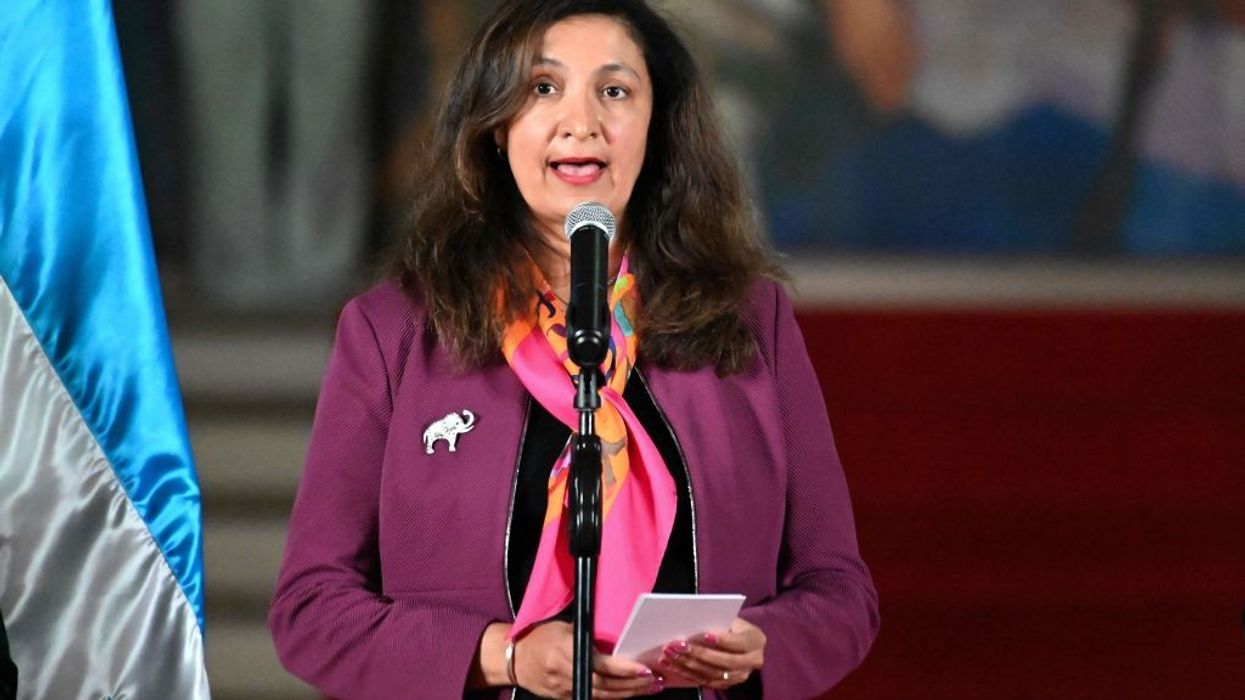
A SENIOR US diplomat will travel to India in the coming days and engage with its civil society over free speech and marginalisation of minorities.
It comes after Indian prime minister Narendra Modi's recent US visit when he denied that abuse of religious minorities existed in his country.
Uzra Zeya, US under-secretary of state for democracy and human rights, will also meet with Indian government officials to discuss "global challenges, democracy, regional stability, and cooperation on humanitarian relief," the State Department said in a statement on Friday (7).
Zeya's upcoming trip follows a June visit by Modi to the United States, where president Joe Biden rolled the red carpet for him even as activists decried what they saw as a deterioration of human rights in India under Modi's watch.
Biden and Modi touted deals on defence and commerce aimed at countering China's global influence.
Biden said he discussed human rights with Modi but he did not publicly criticise him, his Hindu nationalist Bharatiya Janata Party (BJP) or India's government on the topic.
Zeya will also visit Bangladesh on her trip from July 8 to July 14.
"In both countries, Under Secretary Zeya will engage with civil society organisations on freedom of expression and association, and inclusion of women and girls, persons with disabilities, and vulnerable groups, including marginalised religious and ethnic minorities," the State Department said.
During his US visit, Modi denied that abuse of religious minorities existed in India, a claim that activists called a lie and said was contradicted by documentation from human rights advocates.
The State Department has raised occasional concern over human rights in India but criticism of India by the US is not vocal due to close economic ties between the countries and New Delhi's importance for Washington to counter China, political analysts say.
In reports released this year on human rights and religious freedom, the State Department raised concerns over treatment of Muslims, Hindu Dalits, Christians and other religious minorities in India while also noting a crackdown on journalists and dissidents.
India has slid in the World Press Freedom Index to 161st this year, its lowest point. India also leads the list for the highest number of government-imposed internet shutdowns globally.
(Reuters)
Senior US diplomat heads to India to discuss free speech, minority rights
Uzra Zeya’s trip follows a June visit by Modi to the US where he denied abuse of religious minorities in his country