
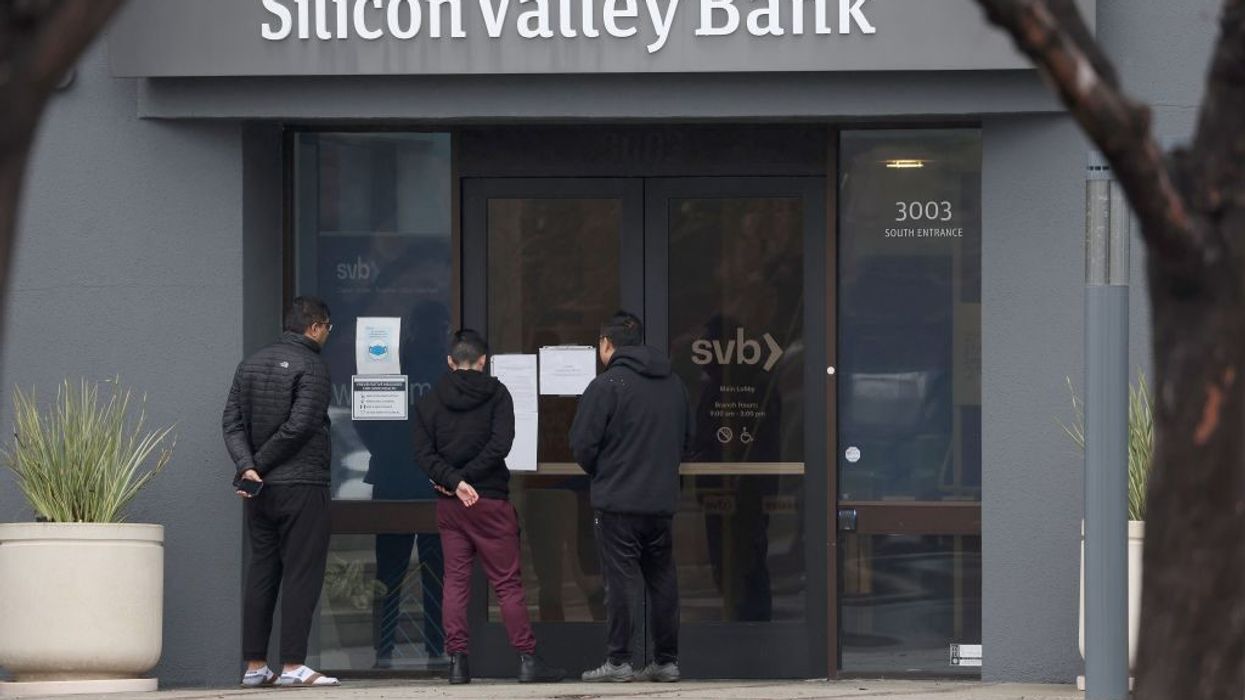
THE COLLAPSE of Silicon Valley Bank (SVB) has injected uncertainty into the Indian startup ecosystem overnight, industry experts say.
“Hopefully the matter will get resolved, but I think it is a big hit for Indian startups,” Ashu Garg, a prominent Silicon Valley-based venture capitalist, said before the Biden administration announced that depositors of SVB will have access to their money from Monday (13).
SVB, the 16th largest bank in the US, was closed on Friday (10) by the California Department of Financial Protection and Innovation which later appointed the Federal Deposit Insurance Corporation (FDIC) as its receiver.
The FDIC, in a statement, said as of December 31, 2022, the Silicon Valley Bank had approximately $209 billion in total assets and about $175.4 billion in total deposits.
“The reality is that the Silicon Valley Bank has been a real supporter of the Indian startup scene and has provided banking services. Most Indian startups that do business in the US use this bank because it is one of the few institutes willing to work with Indian banks. A lot of the banking institutes do not want to work with overseas customers,” Garg, an alumnus of IIT Delhi, said.
“So, SVB has been able to work with the Indian companies that do not have US employees. So if they (are gone), it will be very problematic for the Indian (companies),” he said in response to a question.
Over the past several years, SVB has been one of the most preferred choices of banking for startups and the tech industry in Silicon Valley, mainly because of its understanding of the industry and flexibility in many aspects suiting the startup ecosystem.
“A large number of Indian startups which do not have even an employee or an office in the US had opened up their accounts in the Silicon Valley Bank as it let them do so without many regulatory questions and with a customer-friendly approach. The implications of the collapse of SVB on Indian Americans and their companies are very serious, Garg said.
“The Silicon Valley Bank is the largest vendor to the startup ecosystem. So now you have all these loans. You do not know what is going to happen if the loans get sold and get called.
A group of Silicon Valley-based venture capitalists after a meeting to discuss the aftermath of the bank's downfall said the events that unfolded were deeply disappointing.
“In the event that SVB was to be purchased and appropriately capitalised, we would be strongly supportive and encourage our portfolio companies to resume their banking relationship with them,” it said in a joint statement released by Indian-American Navin Chaddha, an early-stage investor.
(PTI)
Silicon Valley Bank collapse to impact Indian startups: Experts
A large number of Indian startups which do not have even an employee or an office in the US had opened up their accounts in SVB as it let them do so without many regulatory questions









Netanyahu faces backlash for calling Britain ‘Islamic Republic’