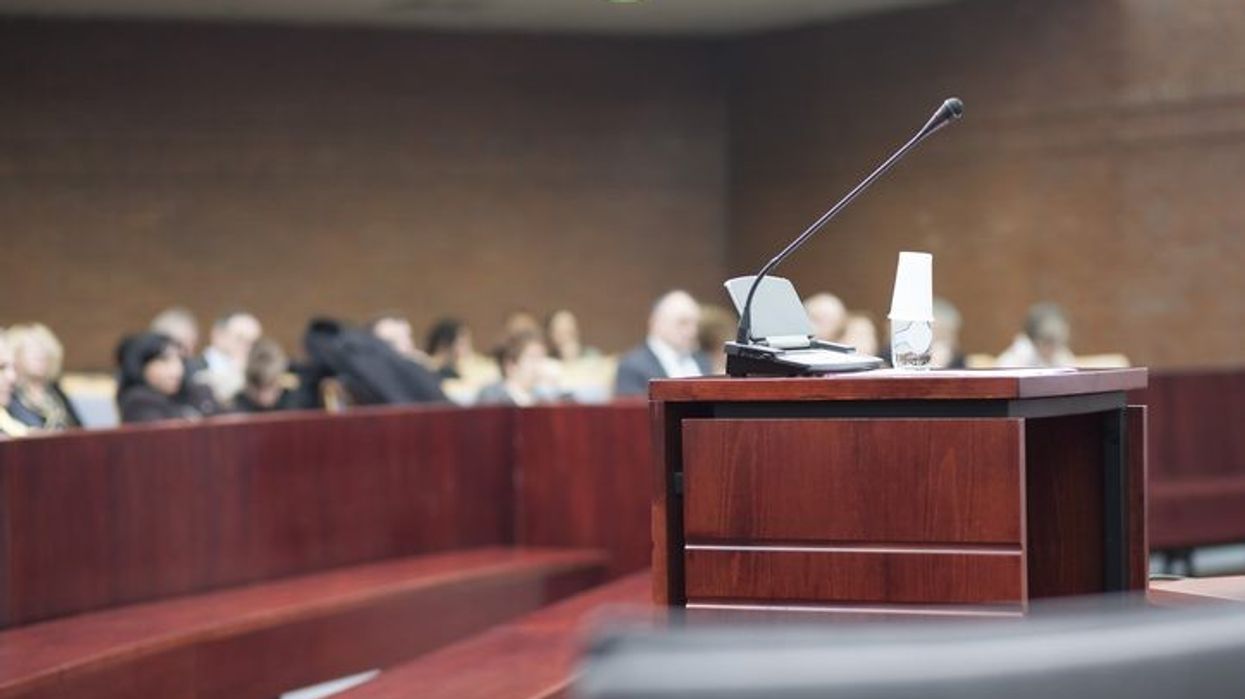

The trial of Mohammed Taroos Khan, who stands accused of killing his niece Somaiya Begum, came to a sudden halt due to unforeseen circumstances.
One of the jurors involved in the case was involved in a car accident, while another suffered an injury from a fall.
Khan, who resides on Thornbury Road in Bradford, was accused of dumping Begum's body on wasteland outside the city centre on July 6, 2022.
Although the 52-year-old has admitted to disposing of her body, he denied murdering the 20-year-old from Binnie Street, Barkerend, Bradford, around June 25, 2022.
Despite his refusal to give evidence during the trial, Khan was found guilty on Tuesday (14) following a nine-hour and 29-minute deliberation by the jurors.
The jury, consisting of 12 members, had been hearing the case at Bradford Crown Court for eight days and were expected to deliver a verdict at approximately 2:45 pm on Thursday (9).
When the jury returned to the courtroom at 4:20 pm, they informed The Honourable Justice Neil Garnham that they had not reached a unanimous decision.
As a result, the judge adjourned the case until Friday (10) morning at 9:30 am, expecting the jury to continue deliberating throughout the day.
However, heavy snowfall in Bradford disrupted travel and schools, which also impacted the trial. The next morning, Judge Garnham brought the jury back into the courtroom around 10:30 am, but only ten jurors were present.
The judge explained that one juror had been involved in a crash and had inquired whether they needed to make alternative arrangements to attend court. The court informed the juror to "hold fire."
Furthermore, the judge notified the ten present jurors that another member had fallen outside of BCC, injuring themself.
Judge Garnham expressed concern that the injured juror was not in the right frame of mind to continue deliberating on such an important matter, and decided that it would be inappropriate to continue with a reduced number of jurors.
The jury resumed their deliberations at noon on Monday (13).
At slightly past 2 pm on Tuesday (14), the judge instructed the jurors to come to a verdict with a majority. Half an hour later, they reached a unanimous decision and found Khan guilty of murder.
Justice Garnham informed Khan that he would be sentenced on Wednesday, March 15.






 Curator Emma Slocombe with ikat robes and arabachi coats in the Peter the Great Room in Blickling Hall Amit Roy
 View of the entrance to Blickling Hall on a rainy autumn dayAmit Roy
 Kente cloth from Ghana in the Long Gallery in Blickling Hall
 Decoration in the Great Hall at Blickling Hall Amit Roy
 Palampore fragment made in coastal south-east India in the Brown Room in Blickling Hall Amit Roy
 Bed valance dating from early 1700s in the Italian Print Room at Blickling Hall Amit Roy
 Indian inspired fabric draped on sofas in the South Drawing Room in Blickling Hall Amit Roy
 Indian inspired fabric draped on sofas in the South Drawing Room with Indian carpet in Blickling Hall Amit Roy
 Karun Thakar has picked out the geometric patterns in the bookcase and the Kente cloth in the Long Gallery in Blickling Hall Amit Roy
 Large tapestry depicting Peter the Great defeating the Swedish army at the Battle of Poltava in 1709 Amit Roy
 ikat robes and arabachi coats in the Peter the Great Room in Blickling Hall Amit Roy
 Baghs and kanthas made by women provide contrast to the men only portraits in the Great Hall at Blickling Hall Amit Roy
 Baghs and kanthas in the entrance Great Hall at Blickling Hall Amit Roy
 Baghs and Kanthas in the Great Hall in harmony with stained glass window at Blickling Hall Amit Roy
 Kimonos reflect Japanese influence in Upper Ante Room in Blickling Hall Amit Roy
 Kimono in Upper Ante Room in Blickling Hall
 A view of the Palace and fort at Agra shows romantic side of India Amit Roy
 Blickling Hall Amit Roy
 Table carpet, European 1670-1680 Amit Roy
 Unfinished 17th century Italian embroidery in the Print Room at Blickling Hall Amit Roy
 Picture of Kashmir shows a romantic view of India Amit Roy
 A panel of Ashburnham bed hangings made in Gujarat for sale in Europe in the Brown Room in Blickling Hall Amit Roy
 Colcha made in the 1600s by women in Bengal for the Portuguese market in the Long Gallery at Blickling Hall Amit Roy




