
CASH-STRAPPED Sri Lanka announced on Tuesday (15) that it was scrapping a $3.85 billion (£3.03bn) deal to build an oil refinery that was set to become the island nation’s largest foreign investment.
Energy minister Kanchana Wijesekera said the cabinet terminated the agreement on Monday (14) because Singapore-registered Silver Park International had failed to begin construction since a ground-breaking ceremony in 2019.
The project was originally meant to be jointly funded by Silver Park, owned by an Indian family company and Oman and was due to be completed this year.
Wijesekera said the government would seek a different foreign partner to set up a refinery primarily for the export of petroleum products.
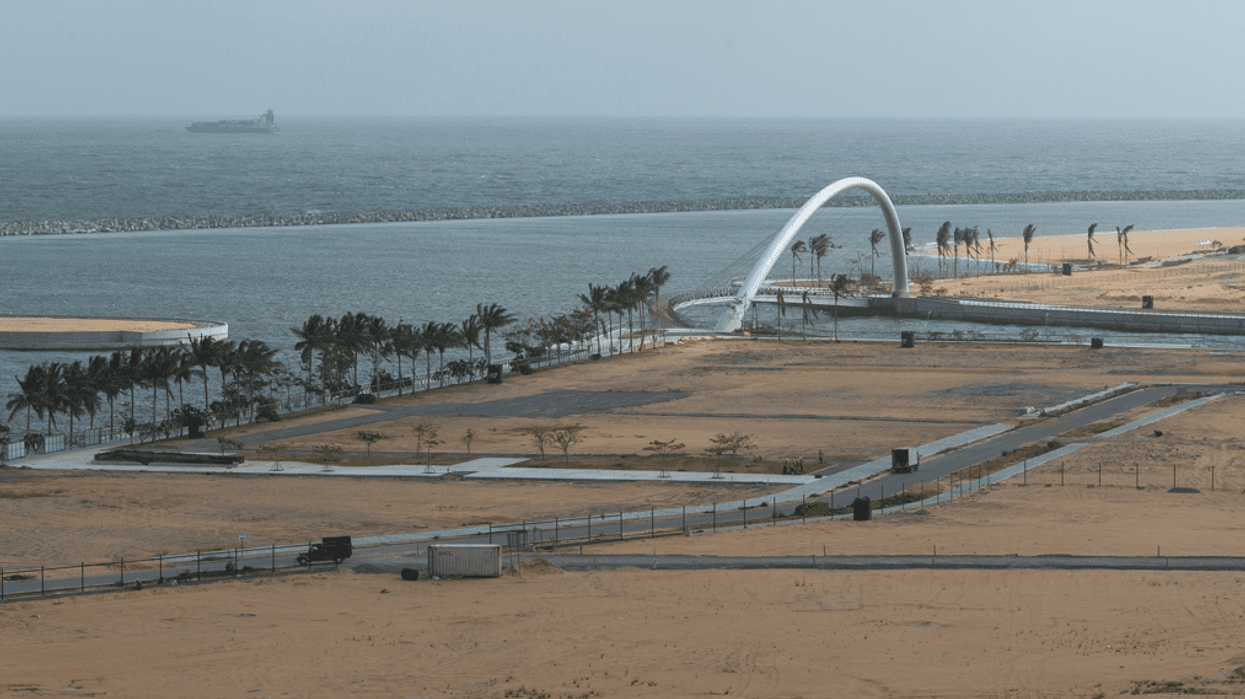
China’s Sinopec and Vitol had been short-listed to set up what would become the island’s second oil refinery, near the Chinese-managed southern port of Hambantota, he said. A new partner would be announced within weeks.
“The cabinet cancelled the agreement with (Silver Park’s) Hambantota Refinery Company because they did not proceed with the construction,” Wijesekera said. Some 1,200 acres (485 hectares) of land allocated for the refinery were taken back, he said.
President Ranil Wickremesinghe was Sri Lanka’s prime minister when he attended the ground-breaking ceremony in November 2019.
Wickremesinghe had hoped the refinery in Hambantota, a deep sea port near busy shipping lanes between Asia and Europe, would attract more investment to the area. The port was controversially leased to a Chinese stateowned firm in 2017 for 99 years for $1.12 billion, less than the $1.4 billion Sri Lanka paid a Chinese company to build it.
Sri Lanka defaulted on its $46 billion external debt in April 2022 after running out of foreign exchange to finance essential food, fuel and medicines.