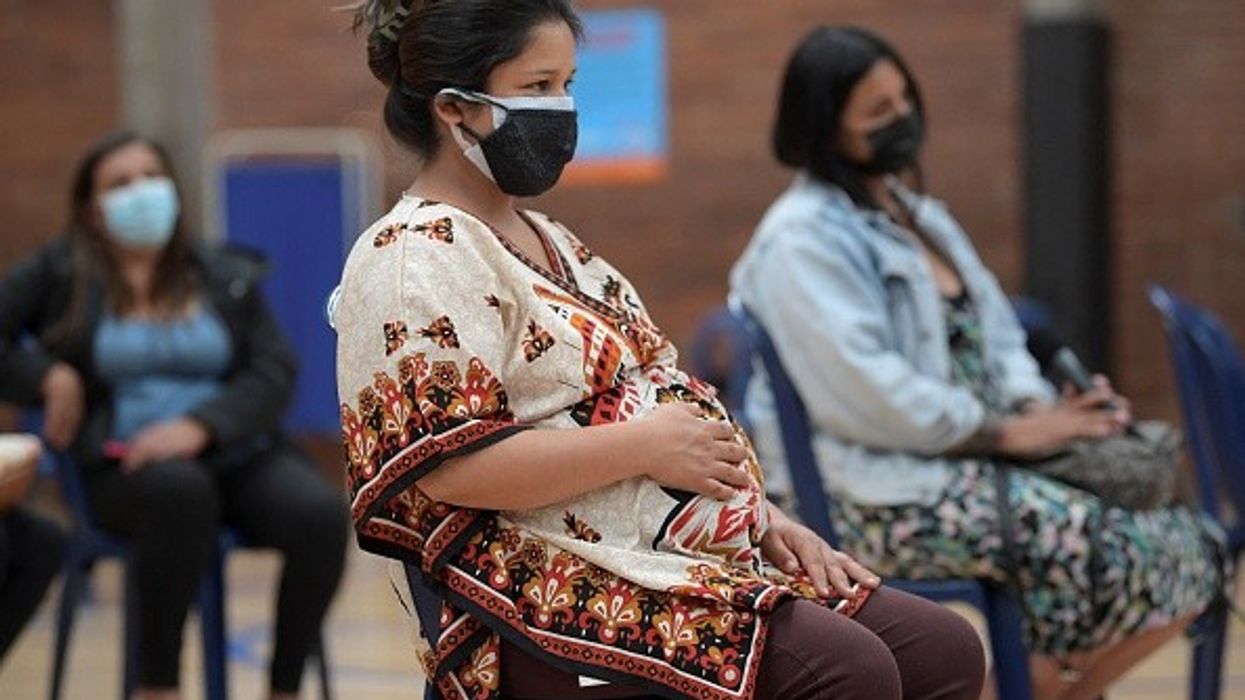

PREGNANT women are more likely to become seriously ill from Covid-19 and should get themselves vaccinated, department of health and social care said today (3) while announcing the launch of England’s largest clinical trial to figure out the best interval time between the two doses of Covid-19 for pregnant women.
The Preg-CoV study, backed by £7.5 million of government funding and led by St George’s, University of London, will provide vital clinical trial data on the immune response at different dose intervals - either four to six weeks or eight to 12 weeks, the department said, adding that the study will help determine the best dosage interval.
The trial will be run across 13 National Institute for Health Research (NIHR) sites in England - including in London, Liverpool and Leeds. All the trial sites are working on ways of including participants from a wide variety of backgrounds and individuals from ethnic minorities are encouraged to apply.
Involving data of 600 pregnant women being vaccinated with either the Pfizer/BioNTech or the Moderna vaccine, the trial will closely monitor the health of pregnant women throughout their pregnancy and following the birth.
The announcement comes after it emerged that most of the pregnant women in the country are still unvaccinated. Following 130,000 pregnant women being vaccinated in the US and no safety concerns being raised, vaccines were recommended by the independent experts at the Joint Committee on Vaccination and Immunisation (JCVI) for pregnant women in the UK back in April.
However, vaccine take-up in pregnant women is still less and has recently been a matter of concern among the experts.
Data published last week by NHS England and the University of Oxford also shows no pregnant women who have had both doses of a vaccine have been admitted to hospital with Covid-19 while 98 per cent pregnant mums admitted to hospital have not received a jab.
Calling eligible expecting mothers to sign-up for the trial, vaccine minister Nadhim Zahawi said: “Pregnant women are more likely to get seriously ill from COVID-19 and we know that vaccines are safe for them and make a huge difference – in fact no pregnant woman with two jabs has required hospitalisation with COVID-19.
“This government-backed trial will provide more data about how we can best protect pregnant women and their babies, and we can use this evidence to inform future vaccination programmes,” Zahawi said.
Further analysis from PHE and the University of Cambridge also suggests vaccines have so far prevented over 52,600 hospitalisations, an estimated 22 million infections and more than 60,000 deaths in England alone.
Volunteers can sign up to the trial here: https://vaccine.ac.uk/research/preg-cov-trial/