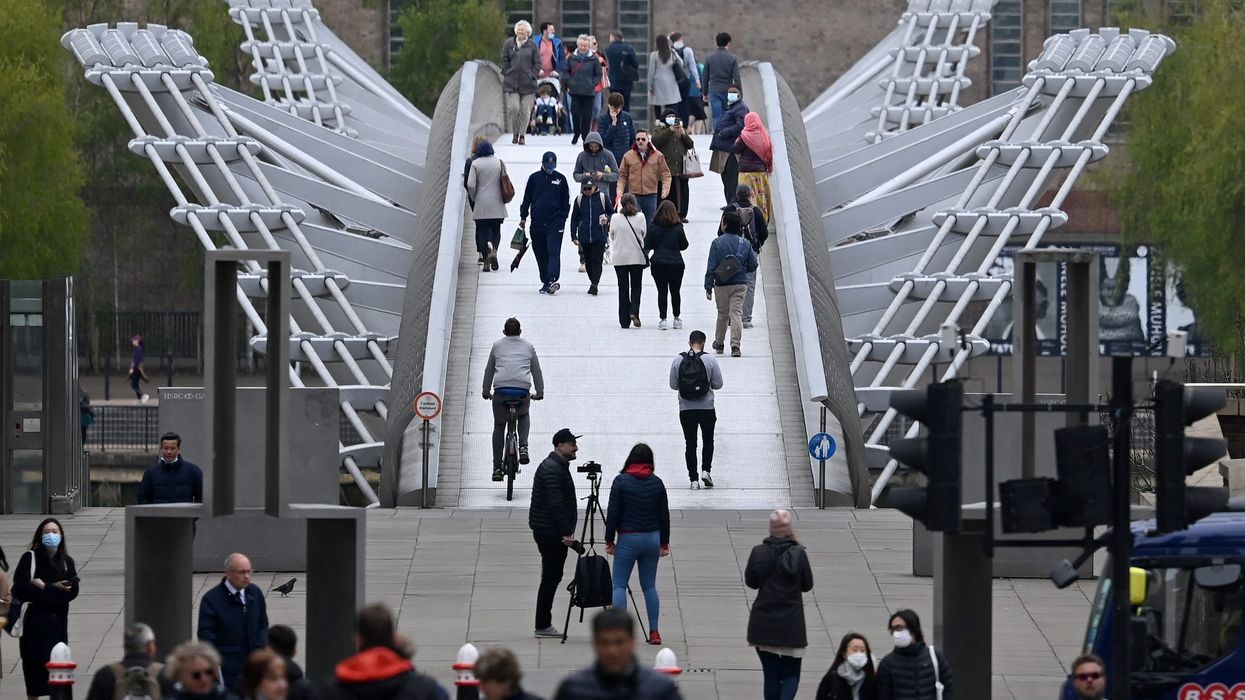

DESPITE strict coronavirus lockdown, the unemployment rate in the UK has dipped to 4.8 percent in the first quarter, the Office for National Statistics (ONS) said in a statement on Tuesday (18).
The unemployment rate of 4.8 percent is down from 5.1 percent in the final quarter of 2020, when Covid-19 cases soared, causing new restrictions to be put in place in January. The number of people in employment in the first three months of 2021 jumped by 84,000, which is the first-ever increase since the pandemic hit Britain.
"The renewed lockdown at the beginning of 2021 saw a sharp rise in the number of previously unemployed people no longer looking for work, helping the unemployment rate fall on the quarter,” Darren Morgan, director of the Office for National Statistics (ONS), said in a statement, adding that employee numbers rose strongly in April as the economy began to reopen.
"With many businesses reopening, the recent recovery in job vacancies continued into April, especially in sectors such as hospitality and entertainment," said Morgan.
The dip in the unemployment rate appears to be an effect of the UK government's job furlough scheme.
The job outlook has improved significantly in recent months, with the government announcing plans to fully reopen the economy by June 21 and also extending wage support for furloughed workers until the end of September.
While the government is paying the bulk of wages for millions of private-sector workers during the coronavirus pandemic, some economists feel that the rate will surge once the furlough scheme, which has cost more than 60 billion pounds so far, ends later this year. As pointed out by Capital Economics analyst Thomas Pugh, "the government's job furlough scheme is still insulating the labour market from the worst effects of the pandemic.”
The central bank now reportedly expects unemployment to peak at just 5.4% in the third quarter of 2021 instead of a previously estimated 7.9%.






 Curator Emma Slocombe with ikat robes and arabachi coats in the Peter the Great Room in Blickling Hall Amit Roy
 View of the entrance to Blickling Hall on a rainy autumn dayAmit Roy
 Kente cloth from Ghana in the Long Gallery in Blickling Hall
 Decoration in the Great Hall at Blickling Hall Amit Roy
 Palampore fragment made in coastal south-east India in the Brown Room in Blickling Hall Amit Roy
 Bed valance dating from early 1700s in the Italian Print Room at Blickling Hall Amit Roy
 Indian inspired fabric draped on sofas in the South Drawing Room in Blickling Hall Amit Roy
 Indian inspired fabric draped on sofas in the South Drawing Room with Indian carpet in Blickling Hall Amit Roy
 Karun Thakar has picked out the geometric patterns in the bookcase and the Kente cloth in the Long Gallery in Blickling Hall Amit Roy
 Large tapestry depicting Peter the Great defeating the Swedish army at the Battle of Poltava in 1709 Amit Roy
 ikat robes and arabachi coats in the Peter the Great Room in Blickling Hall Amit Roy
 Baghs and kanthas made by women provide contrast to the men only portraits in the Great Hall at Blickling Hall Amit Roy
 Baghs and kanthas in the entrance Great Hall at Blickling Hall Amit Roy
 Baghs and Kanthas in the Great Hall in harmony with stained glass window at Blickling Hall Amit Roy
 Kimonos reflect Japanese influence in Upper Ante Room in Blickling Hall Amit Roy
 Kimono in Upper Ante Room in Blickling Hall
 A view of the Palace and fort at Agra shows romantic side of India Amit Roy
 Blickling Hall Amit Roy
 Table carpet, European 1670-1680 Amit Roy
 Unfinished 17th century Italian embroidery in the Print Room at Blickling Hall Amit Roy
 Picture of Kashmir shows a romantic view of India Amit Roy
 A panel of Ashburnham bed hangings made in Gujarat for sale in Europe in the Brown Room in Blickling Hall Amit Roy
 Colcha made in the 1600s by women in Bengal for the Portuguese market in the Long Gallery at Blickling Hall Amit Roy