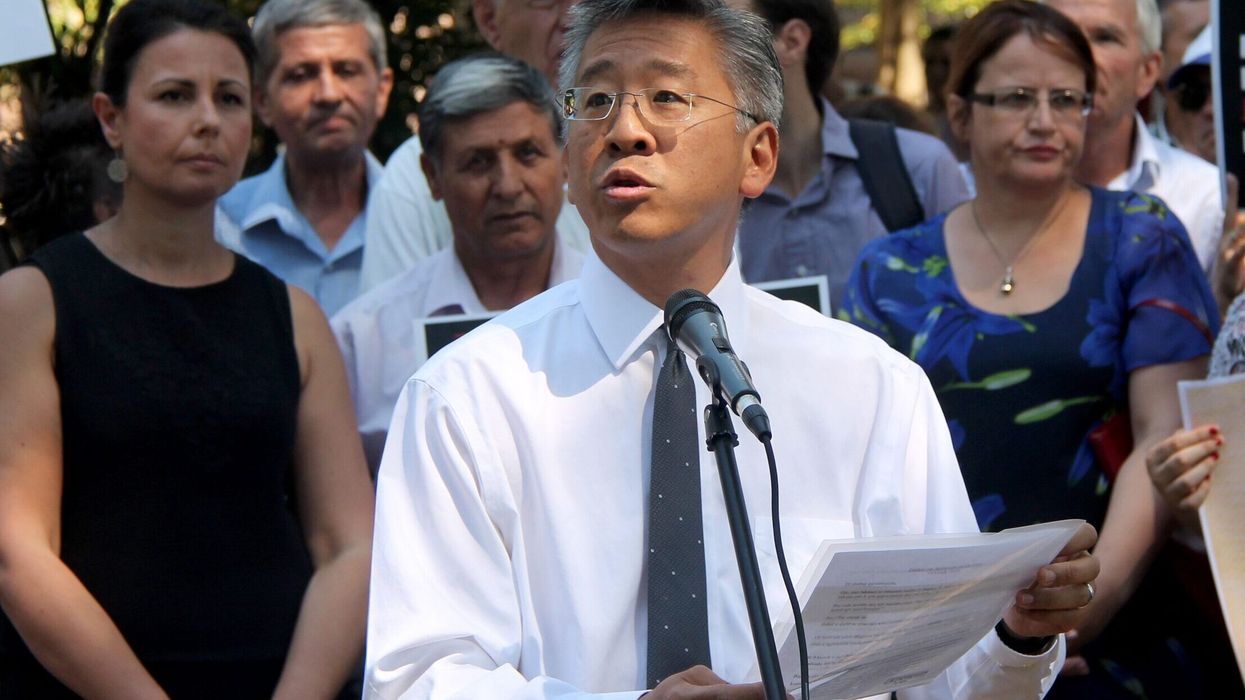

The days of China investing heavily in Pakistan are over, a senior US administration official informed lawmakers, emphasising that the United States represents the future.
“China is the past in terms of investments in Pakistan, we are the future,” Assistant Secretary of State for South and Central Asia Donald Lu told lawmakers during a Congressional hearing on Tuesday.
Lu was responding to questions from the Congressmen, who expressed concerns over the Chinese investment in Pakistan and other countries in South and Central Asia, including Sri Lanka and Maldives.
“I would argue the Chinese plan is to have a military base in every country and every infrastructure project is made with high interest Chinese loans and low paid Chinese workers. We just see this model all throughout the region,” he said. The Chinese bring in their own workers. They don't actually train local workers to do their enterprises. They extract minerals, literally take gold and copper from the ground and just ship it back for processing in China.
“They don't spend any money in local communities. This is going to have a boomerang effect for Chinese businesses and their interests. We talked about Pakistan and the investments there, $26 billion (£20.1bn). They put a huge amount of money in Pakistan. I actually don't see them putting a dime in there right now because they're really worried about whether they're going to get their money back there,” he said.
“Their really terrible investment strategy is biting them in the ass and we have an opportunity to do a better job to make sure countries know there are options and they don't have to be beholden to one,” Lu said.
Congressman Rich McCormick said China has vastly outspent the United States throughout the entire region, especially in Pakistan since 2012. They are making solid progress in the China-Pakistan Economic Corridor known as CPAK. This gives China a significant leverage over Pakistan, he noted.
“I'm really worried about the future as we invest, how do we leverage our position with Pakistan, our historic relationship given also our relationship with India and that's developing very quickly. How do we balance that and keep that in our advantage?” he asked.
Lu said the US is facing ongoing challenges and opportunities in Pakistan.
“The president's budget requests a straight lining of our $101 million (£7.83m) Pakistan budget. That money will be used to strengthen democracy and civil society, fight terrorism and extremism and to support economic reforms and debt management to help to stabilize Pakistan's economy and prevent further overreliance on China,” he said. (PTI)