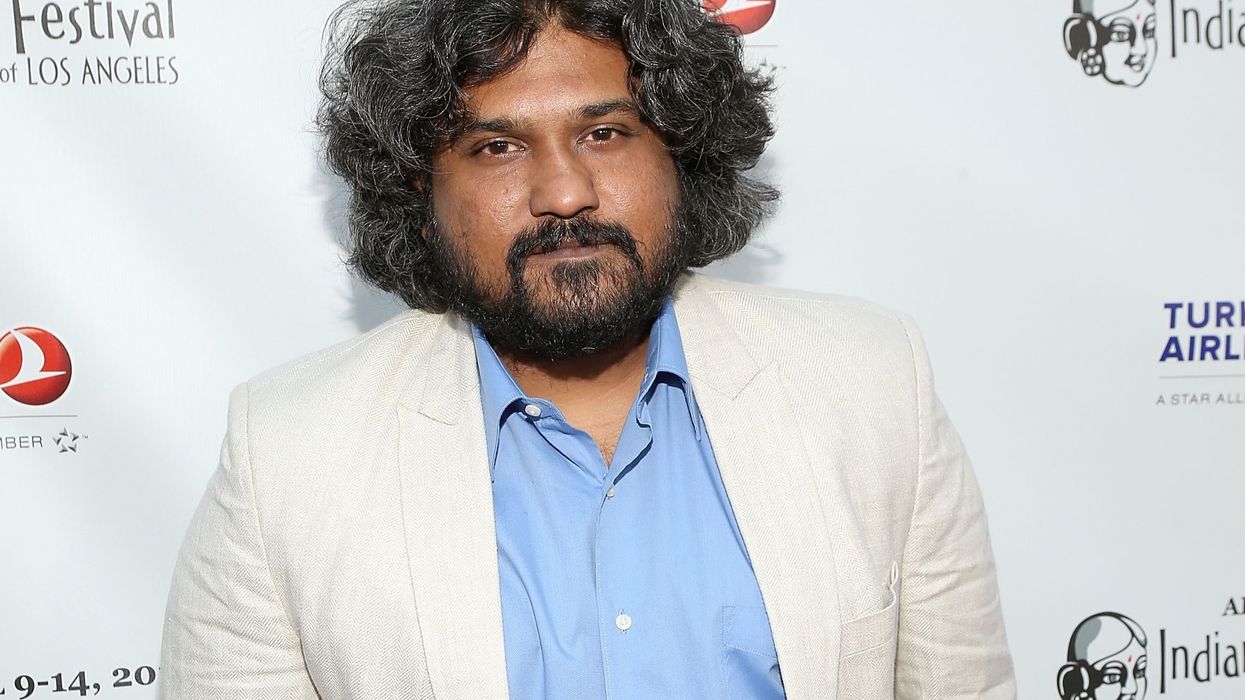

Filmmaker Vasan Bala loves adding nostalgia and pop-culture references to his films. His film Mard Ko Dard Nahin Hota (2018), starring Abhimanyu Dassani, Radhika Madan, and Gulshan Devaiah in lead roles, was a homage to martial arts legend Bruce Lee imbued with Bollywood references starting from its title.
Bala says that the references are never introduced while writing the film and come in at a much later stage. “The references come much later. First, we are interested in deciding what we are trying to say and what the characters are. And once we are done, then I have fun garnishing with references of films and actors and other things I love,” he says.
The filmmaker goes on to add, “I just sprinkle. It's fine even if audiences don't get those references. It gives me an emotional connect while making films.”
He says as someone who has grown up watching all the pulpy, popular and cult films from across the globe, returning to his memories is the best way to stay on track as a filmmaker. “It's like tapping into some kind of memory bank, nostalgia or probably it's just a kind of pinch to keep reminding me why I am doing this. It's a beautiful reminder. And if I have the opportunity to keep doing it then why not. No one needs to know all this… It's about going into a moment that emotionally drives me,” he explains.
The filmmaker adapted the same process for his next venture Ray. Set to premiere on Netflix, Ray is an anthology series based on the short stories written by legendary filmmaker Satyajit Ray.
The series consists of four episodes, with Bala helming Spotlight, featuring Harshvardhan Kapoor and Radhika Madan. His segment also features many pop-culture references and well-defined characters. The filmmaker says that the best way to write a story is to give every character its own life and persona.
“None of these characters are sidekicks or protagonists or anything. They all exist in their own worlds and are connected the way people are connected in real life. When the writing doesn't fall into the trap, wherein a character has to exist just to react, it's great. We take that approach in writing and make sure every character has its own emotions in the context of the film. There isn't an archetype we were trying to tap in. We put in all the experiences of everyone we know so that, at the human level, we all can connect to these characters," he concludes.
Ray will premiere on Netflix on June 25, 2021.