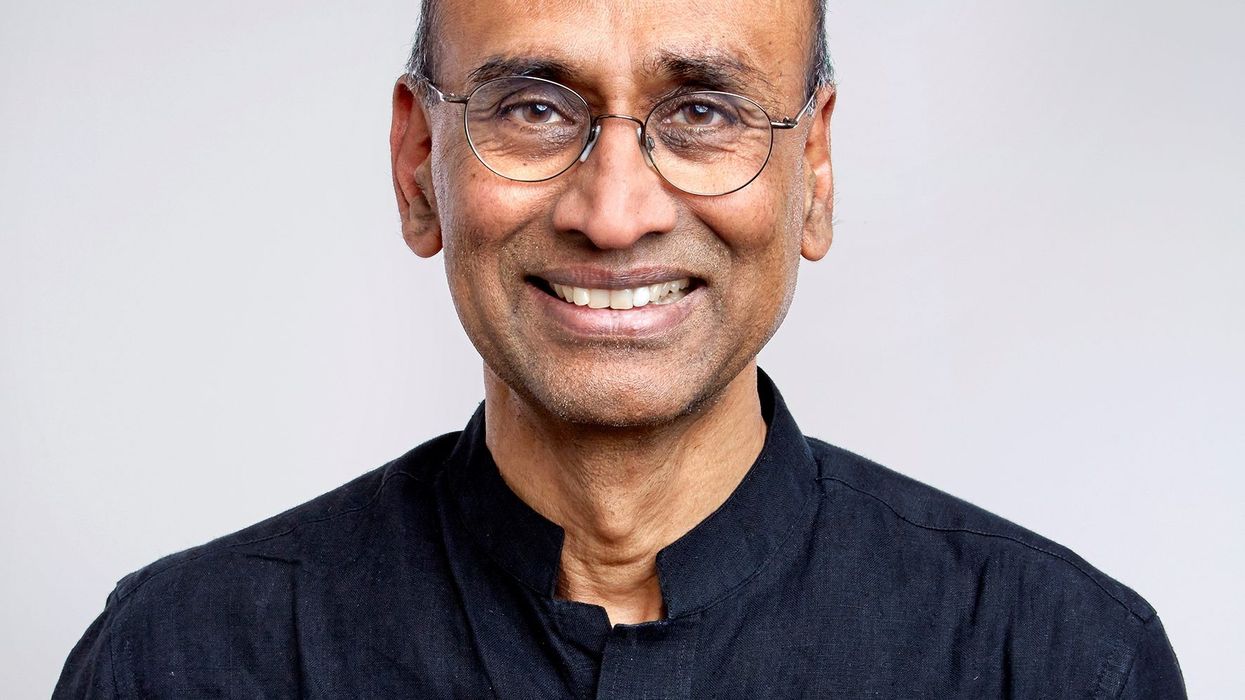

THE rush to commercialise longevity research, driven by "hype and anxiety" over increasing human lifespans, is outpacing scientific understanding, Nobel laureate Venki Ramakrishnan has warned.
Speaking at the Hay Festival in Wales, Ramakrishnan, a former president of the Royal Society, cautioned that while scientists are just beginning to unravel the complexities of ageing, significant investments from billionaires like Amazon founder Jeff Bezos and PayPal co-founder Peter Thiel are pushing the industry ahead of solid scientific grounding.
Ramakrishnan's comments coincided with the release of his new book, Why We Die, which explores the biological mechanisms of ageing and potential lifespan extensions.
He expressed concern that the commercial drive in the anti-ageing industry could skew the focus and incentives of scientific research.
"The hype and anxiety about ageing is pushing the commercial aspects in a direction that is running well ahead of science," Ramakrishnan, who won 2009 Nobel Prize in chemistry, was quoted as saying.
“Some of it is going to be put to good use because they’ve attracted some of the top scientists in ageing to join their ventures and these people are serious scientists who will continue to do great science but it might distort the incentives and directions of it because of the way it’s funded.”
As an example, he pointed to Bryan Johnson, an American tech entrepreneur who spends $2 million annually on anti-ageing efforts, including receiving blood transfusions from his son to test the effects of younger blood on an older body.
This practice, though inspired by studies on mice showing potential benefits of young blood on older organisms, remains unproven in humans and could take decades to fully understand, he pointed out.
Ramakrishnan stressed the need for a methodical approach: "We should let science proceed, let people find out what it is about young blood that’s causing the effect, what are the factors, what are they doing, and then gradually, we might be, in the future, able to use some of that information."
The anti-ageing industry is already valued at $30 billion and is projected to grow to $45 billion by 2031, according to InsightAce Analytics. Tech entrepreneurs have significantly contributed to this market's development.
Read Also: Labour volunteers approached me for votes: Faiza Shaheen
Thiel was an early investor in Unity Biotechnology, which develops drugs targetting ageing cells, and Bezos invested in Altos Labs, a biotech company focusing on cellular rejuvenation, in 2021.
According to Ramakrishnan, influx of private funding could lead to research that prioritises quick results and profitable returns over thorough scientific investigation.
"We need to do the research first and not take that initial finding and go straight into the marketplace and just start selling something," he advised.